
PERFORMANCES
In collaboration with Yamaha, UCL, and the V&A, CMMR presents a series of performances across the UCL East campuses and the V&A East Storehouse.
Alongside a vibrant programme of installations and performances in the Marshgate and Pool Street buildings, fifteen sound installations and live performances will animate the V&A East Storehouse over three days. Bringing together artefacts and recordings, artists and academics, the event explores how objects can become sound, and how sounds can in turn become new objects — inhabiting and moving amongst the collection.
Jump to:
UCL performances (ticketed)
V&A performances (free)
Abstract:
We want a wild and ephemeral music. We propose a fundamental regeneration: concert strikes, sound gatherings with collective investigation.
Featuring: Elvin Brandhi \\ Sally Golding \\ Mark Harwood \\ Nick Luscombe \\ The Nonument Group \\ Ruaridh Law \\ Matt Spendlove \\ Oliver Coates
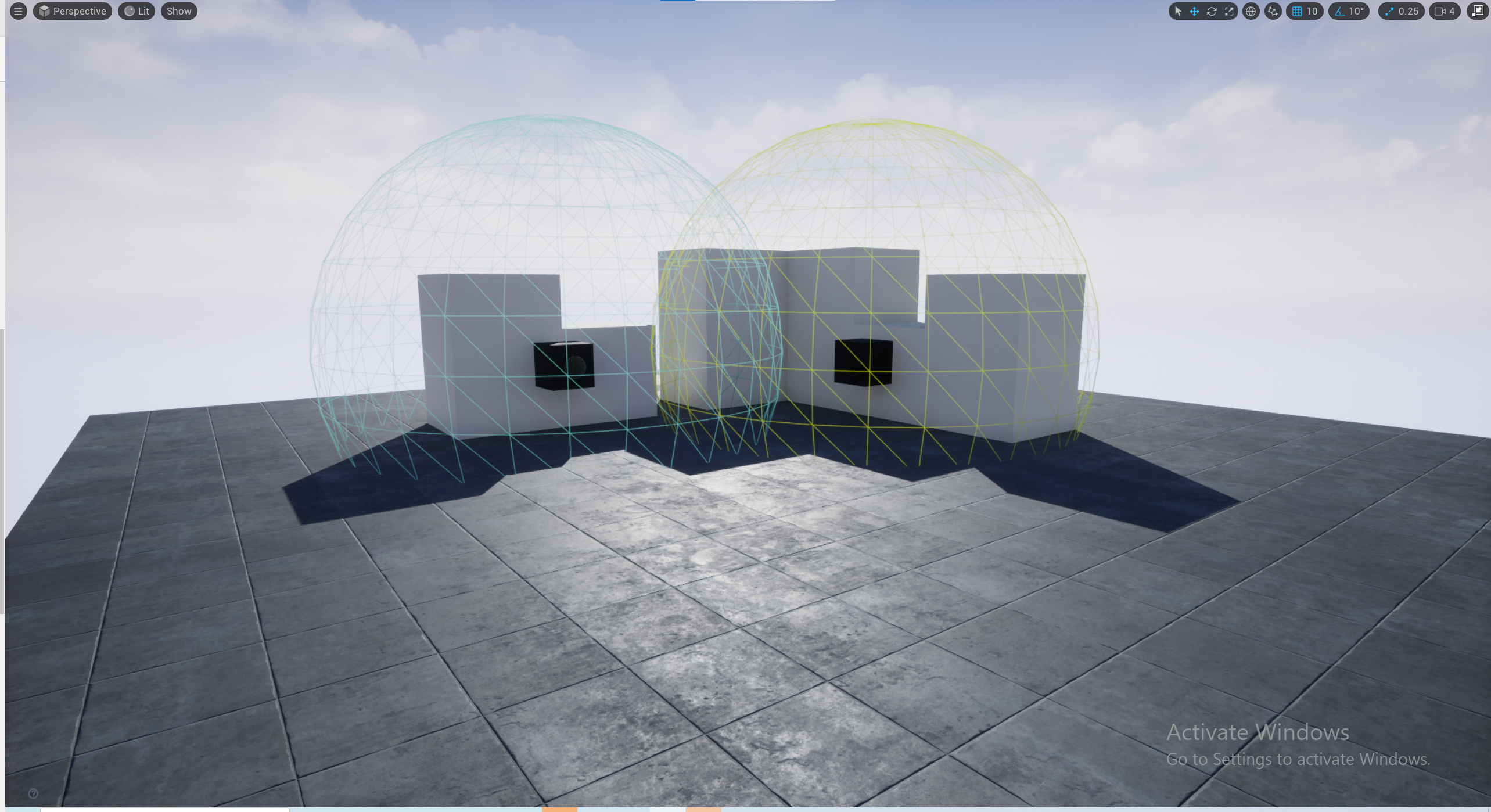
The Situationists' Walkman is a digital dérive—a playful, non-directed audio only augmented reality experience that offers surprising, uncanny sonic augmentation to familiar outdoor environments. Developed through Innovate UK Creative Industries Fund research, the project uses the city as a playground, projecting spatial audio artworks unconstrained by gallery settings to create what we term "a 3D graphical score with a participant conductor". Realised around Queen Elizabeth Olympic Park in East London, the work draws from Situationist International's concept of dérive—"undirected, spontaneous exploration of the urban environment." This artistic intervention celebrates open public spaces while demonstrating AR's creative potential beyond commercial enclosure, directly responding to contemporary concerns about technology's role in public space commodification. Featuring commissioned sonic works by artists including Elvin Brandhi, Oliver Coates, Sally Golding, Ruaridh Law, Nick Luscombe, The Nonument Group and Matt Spendlove distributed across overlapping zones that participants discover through movement. Initial funding from Creative Industries Fund 2021. This project is gratefully supported by Innovate UK, the UK’s innovation agency.
Bio:
Matt Spendlove is an artist from London who creates immersive installations, audiovisual performances and sonic artefacts. Across these situations he explores spatial ambiguity, structural form, waveform materiality and the illusory contours of psychophysics. His work channels the dynamics of sound system culture by incorporating low frequency vibration alongside hacked code and optisonic experiments. He combines a preoccupation with emergent behaviour, rule based repetition and chaotic systems to generate enlivened visual stimuli and shape dubbed out, cracked and reductive sonics into audible geometric form. Through textured intricate production, his shows bring corporeal presence carved out with a minimalist’s scalpel. International commissions, recordings and performances have included Mutek, Montreal; High Zero, Baltimore; Unsound Festival, NYC/Krakow; Club Transmediale, Berlin; Filmwinter, Stuttgart; Algorithmic Art Assembly; San Francisco; E-FEST, Tunisia; MoTA Gallery, Ljubljana; Cafe OTO, London; Melbourne International Film Festival; Metro Arts, Brisbane; and Serralves Museum, Porto.
Abstract:
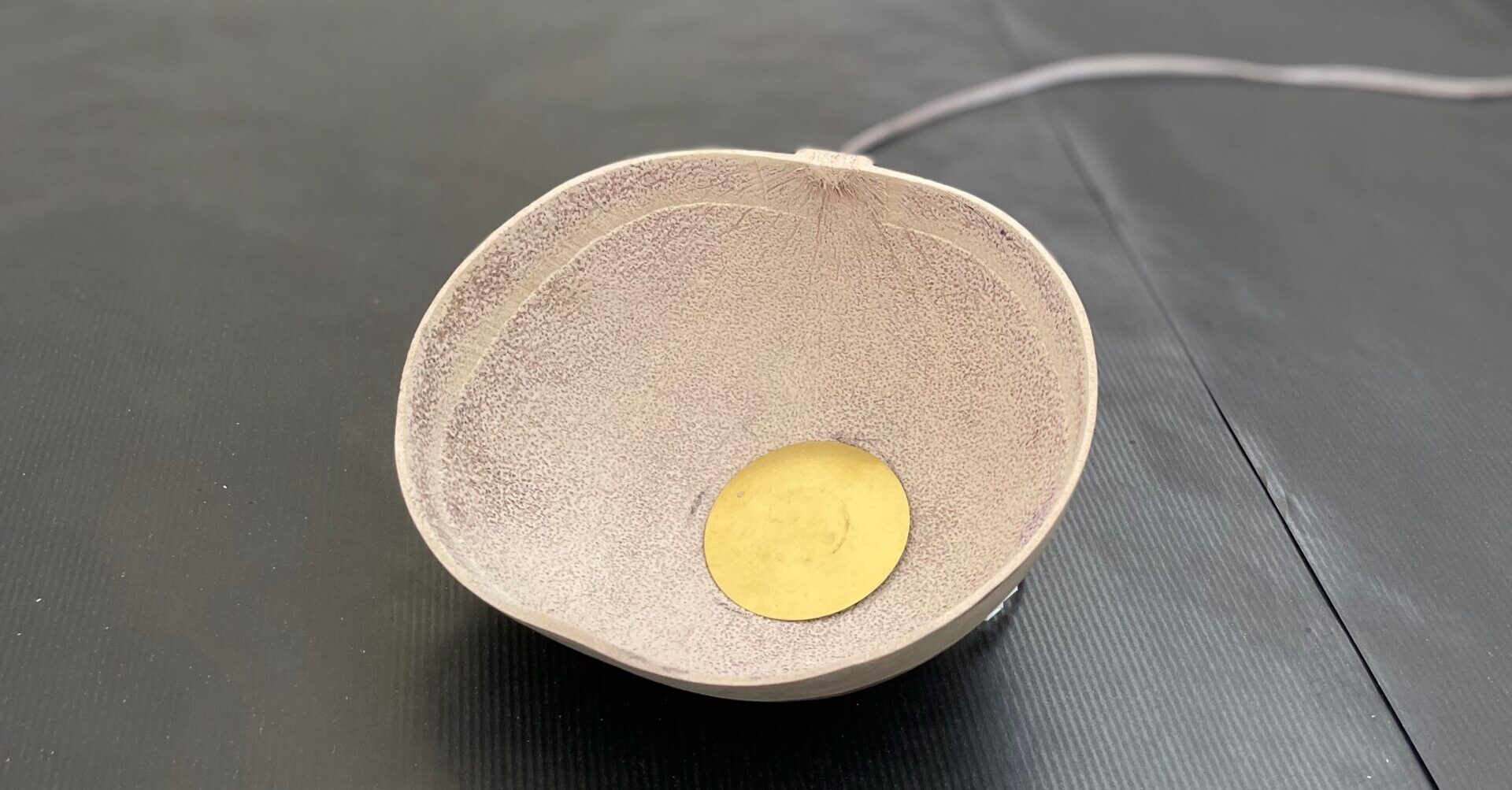
Calebasses Labs is a 32-channel low-tech sound installation mainly made of South American calabash bowls and piezoelectric transducers. Sensitive to the issue of noise pollution and the wider climate crisis, the installation explores low-intensity sound fields yet highly articulated through a multi-scale composition approach, both in space and in time, resulting in a sound environment that is as dense as it is quiet. Given that the sound diffusion level operates at the lower threshold of the decibel scale, the installation necessitates near-field listening. The artist proposes close listening sessions, each lasting around 25 minutes, featuring a real-time live coding performance in interaction with the installation. The music is created using an object-oriented programming language with which a large number of figures of varying sizes are composed. These figures are defined as finite sequences of events through the formalization of diverse patterns. Using a reference model, the installation reveals a network of interconnected and autonomous figures unfolding across multiple spatio-temporal scales. Furthermore, the installation also seeks to surpass the conventional paradigms of 'mediation', 'transparency' or 'sound quality' dictated by the recording and audio diffusion industries, enabling an empirical and artistic investigation of the acoustic output generated by each calabash. Accordingly, as the composition's sound writing and diffusion are intrinsically linked processes, the installation operates neither as a traditional instrument nor as a reproduction device. It is what it is: a singularity.
Acknowledgments: Calebasses Labs was created thanks to French government aid program: “Aide à l’écriture d’une œuvre musicale originale du Ministère de la Culture/Direction régionale des affaires culturelles d’Île-de-France, 2024”
Bio:
Mario Lorenzo is a composer of electroacoustic and instrumental music. His work explores a multi-scale approach, weaving together a wide array of figures of varying sizes—both independent and interrelated—in a dynamic interplay between micro- and macro-time. With an academic background, he completed a PhD dissertation focused on a conceptual clarification of the notion of choice in musical composition, examined through the lens of the philosophy of language. His body of work includes La obra tiene al sembrador for instrumental ensemble; Five pieces for wind quintet; the opera Richter for baritone, mezzo-soprano, tenor, two pianos, percussion, and choir; the electroacoustic pieces Erre and YV; the sound installation Compost; as well as mixed works such as Craa and the cycle Figures sur la corde for guitar and electronics, commissioned by the French Ministry of Culture. He is an associate researcher at the CICM, at the Maison des Sciences de l’Homme Paris-Nord and currently participates in the ANR-funded SublimAE project (EHESS, ENS).
Abstract:
Lecture-Performance
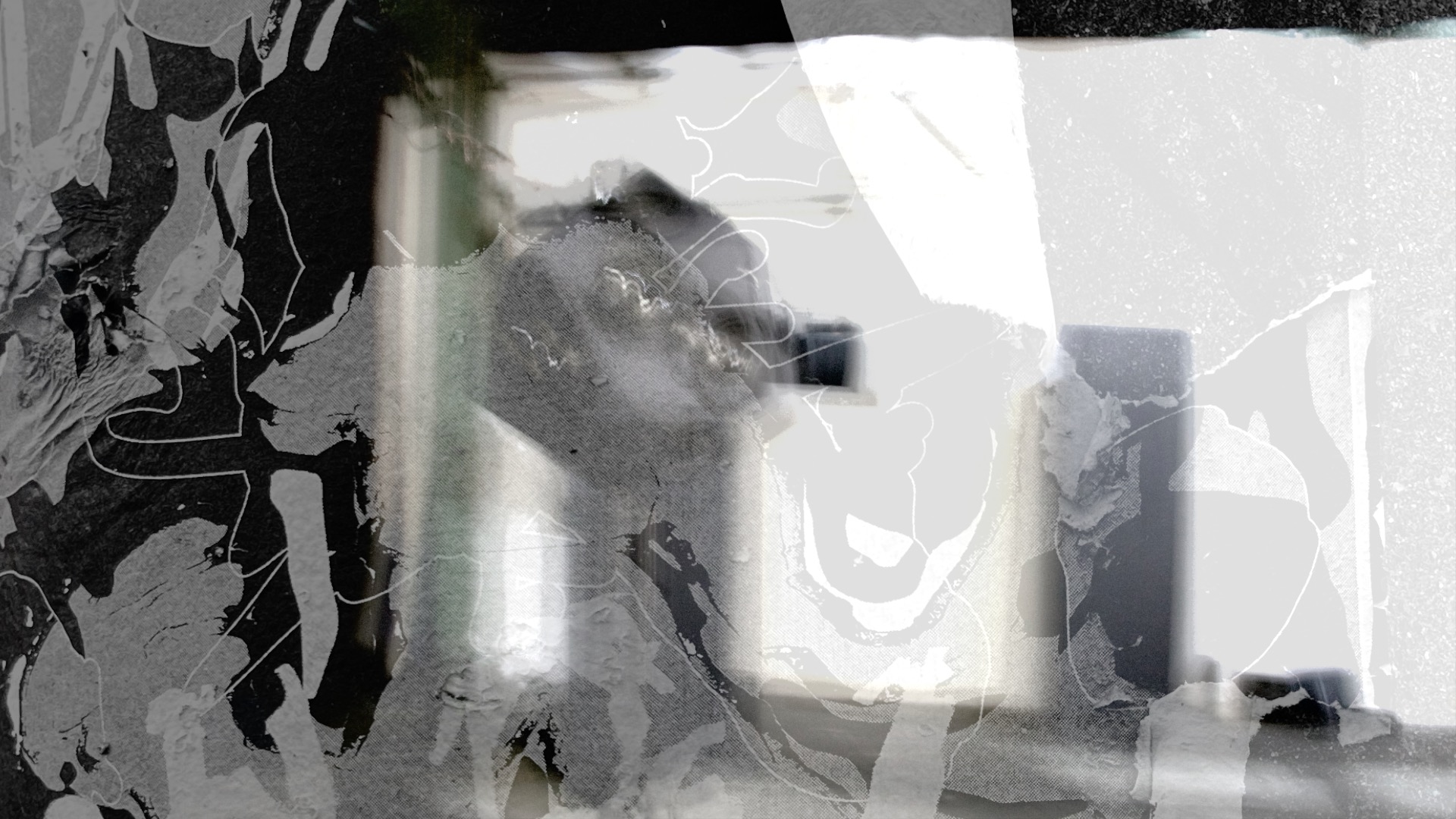
Extended reality is no longer a horizon to come—it is already shaping the conditions of our perception. polycluster is an auditory exploration of presence and absence, utilising layered sound textures to augment the perception of space in dialogue with the acoustics of its architectural environment. The composition plays with auditory masking and negative space, allowing silence and resonance to become as significant as sound itself. Distorted whispers, deep sub-bass drones, and textural noise interact unpredictably, evoking the sensation of something perpetually just out of reach. As the sculptural textures evolve over time, polycluster invites listeners to engage with what is sensed rather than explicitly heard, challenging the boundaries between presence and void within XR. Sound is treated as a malleable material—shaped, displaced, and reconfigured through precise spatial interplay. The work emphasises the physicality of sound and its structural relationship to time, sculpturality, and emptiness.
Bio:
Gerriet K. Sharma is a Berlin-based composer, media artist, and artistic researcher in spatial practices. Within the past 20 years he was deeply involved in the spatialisation of electroacoustic and instrumental compositions in Ambisonics and Wave-Field Synthesis. Furthermore, he was extensively concerned with textural transformation processes into 3D-sound sculptures. He studied Media Art at the Academy of Media Arts Cologne (KHM) and composition & computer music at the University of Music and Performing Arts Graz (KUG). In October 2016 he completed his doctorate “Composing with Sculptural Sound Phenomena in Computer Music” at the scientific-artistic doctoral school Graz. From 2009 to 2015 he was curator of “signale-graz” concert series for electroacoustic music, algorithmic composition, radio art, and performance at MUMUTH/KUG His works were presented at international festivals, conferences and symposia. Sculptural works for the icosahedral loudspeaker (IKO) and loudspeaker hemispheres were presented amongst others at Darmstädter Summer Courses 2014, Music Biennale Zagreb 2015, New York Electronic Music Festival 2016, Kontakte Festival Berlin 2017 & 25, and Wiener Festwochen 2022, Berlin Art week 2025. He received numerous awards and scholarships amongst the German Sound Art Award 2010. Senior artistic researcher within the three-year project “Orchestrating Space by Icosahedral Loudspeaker” (OSIL) funded by the Austrian Science Fund (FWF). He was appointed DAAD Edgard Varèse guest-professor at the TU Berlin in 2017/18. Publications in international journals and books on spatial practices, music and sound – “Aural Sculpturality – Spatio-temporal Phenomena within Auditive Media Techniques” was published by ZKM in 2019. His binaural spatial sound model (ssm) firniss redux was published by mille plateaux in 2020 and was part of the lumbung radio project at documenta 15. Initiator of the Special Interest Group “Spatial Aesthetics and Artificial Environments” within the Society for Artistic Research (SAR) and co-founder of the “Lab for Spatial Aesthetics in Sound” (spæs) at Funkhaus Berlin in 2020. From 2022 to 24 he was appointed guest professor for experimental sound and space at HfG/ZKM Karlsruhe. In October 2024, his AI-assisted composition for chamber orchestra, electronics, spatialization with two IKOs and reactive piano “This is Water” was premiered in the Beethovensaal of the Liederhalle Stuttgart.
Abstract:
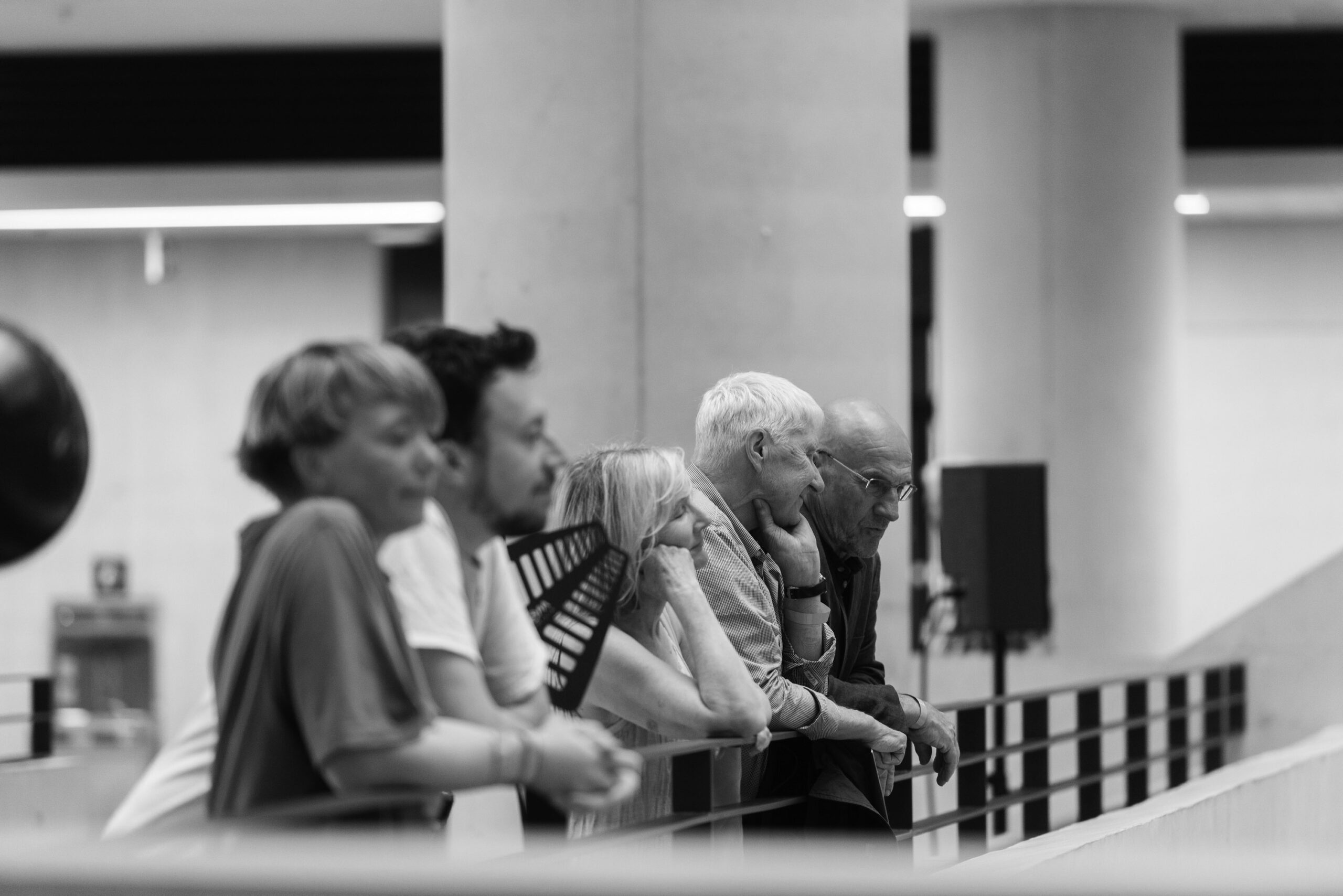
A site-specific, multichannel sound installation created for Marshgate, UCL East, the work invites listeners to deepen their presence in the everyday environment through enlivening perceptions and enhancing awareness. Featuring a minimalist polyphonic choral composition drawing influence from venetian choral music, cori spezzati, (broken choruses) voices call across the vast atrium space, with solo voices serving as coordinates to define the reverberant open space. Interwoven within the composition are field recordings taken from the building itself. Lysergic and eerie, these processed recordings play with psychoacoustic perception and liminal listening perspectives, enlivening listeners to the sound and space around them. A unique array of 16 speakers arranged across 6 floors of the building, transform the architectural space into a resonating body, encouraging an embodied exploration of the space to create a dynamic composition and evolving listening experience from multiple perspectives.
Bio:
Amanda Butterworth is a sound artist, composer, and performer whose work explores sound, space, and deep listening. Drawing on her background as a vocalist, yoga teacher, and trained actor, her research explores themes of embodiment, phenomenology and deceleration, creating immersive artworks that foster deeper connections to our environment, rather than offering an escape from it. With a degree in Contemporary Art from Nottingham Trent University and more recently a distinction in UCL’s MA in Designing Audio Experiences she brings a strong understanding of psychoacoustic perception and spatial audio technologies to her practice. Her work, Peripheries (2024), was a site-specific sound installation at Marshgate, UCL East. A polyphonic choral composition, blended with field recordings from the building itself, to create plural listening perspectives and illusory auditory perceptions, encouraging a deeper awareness of sound and space through embodied listening. Under her alias Mücha, she has released seven solo albums, including Hello Caller and Fall on Frequency Domain, both critically acclaimed. Fall was praised in The Quietus by Noel Gardner for its rich textures, ‘Liz Fraser-Ish’ vocals and intricate sound design. Hello Caller, was named Album of the Day by Foxy Digitalis. Collaborations include projects with Glen Johnson of Piano Magic and electronic artist Datassette. Notable performances include support for Sleaford Mods in 2019 and solo sets at Café Oto and Iklektik. In her live spatial audio performance, Conversation, at the 2024 Open City Documentary Festival, Butterworth and collaborators Diego Ramos Gutierrez and Mikolaj Tchorzewski improvised with Max MSP to create a sonic dialogue, blending voice, guitar, and 3D-processed sound.
Abstract:
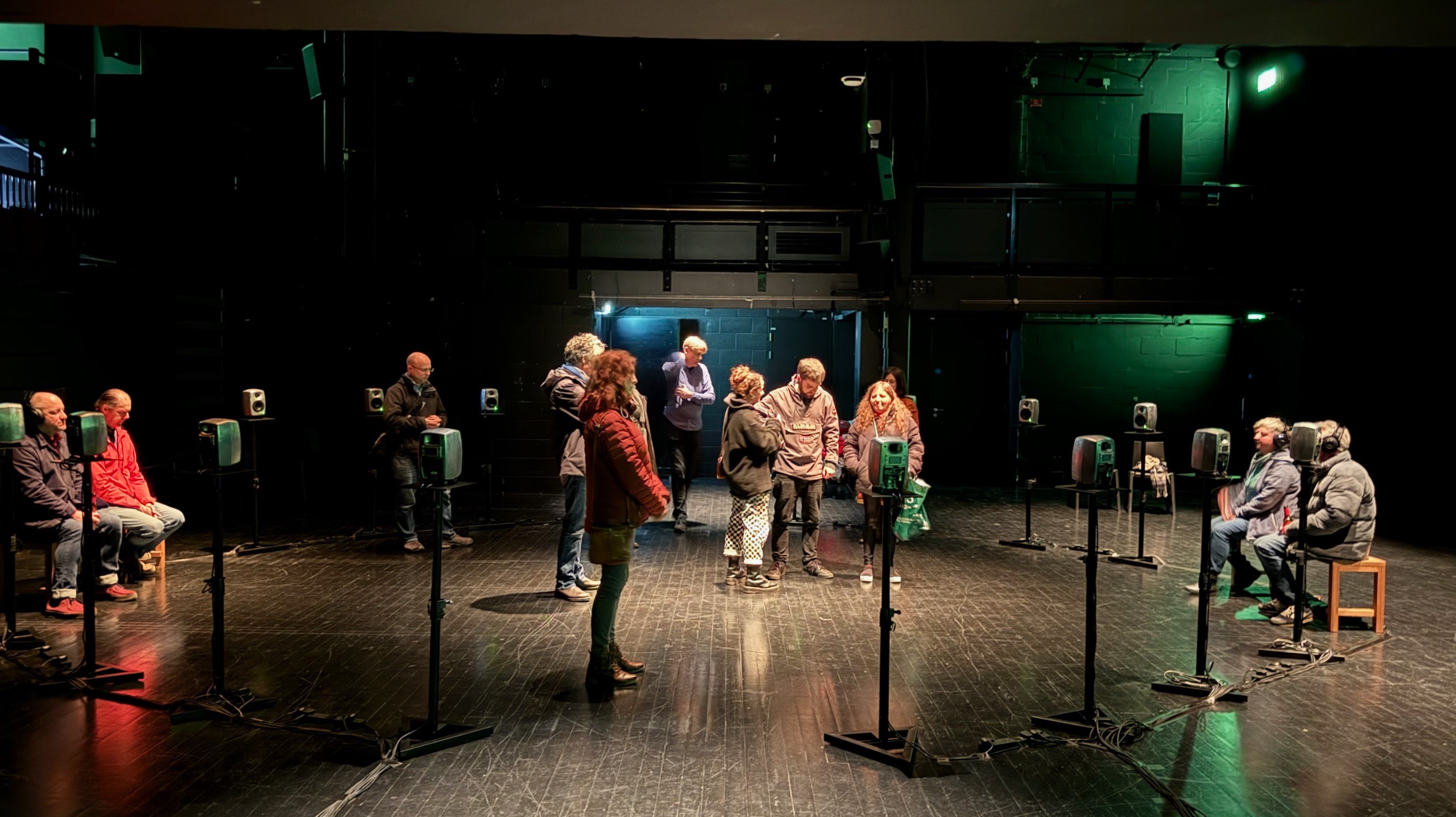
Unravelling / Desenredando is a surround-sound bilingual installation (Spanish and English) featuring the voices of nine Colombian women from varied backgrounds, listening to and resonating with each others’ stories of their migratory journeys to Europe. Improvising in trios, they weave a multilayered sonic memory of intense and intimate listening, while sounding their experiences of how migration and conflict are heard through their bodies: their social spaces of interaction, the memory of conflict in their native land, and the challenges met in the countries where they now live. The installation invites audiences to be immersed in these women’s individual experiences and find resonances in the overlaps and synchronicities, as they might also meet across universal narratives between gender, conflict and migration.
Bio:
Ximena Alarcon is a sound artist-researcher, with a PhD in Music, technology and Innovation, working on the creation of online environments, telematic sonic performances, and Interfaces for Relational Listening. Ximena composes hybrid listening rituals (online and offline) with musicians and non-trained musicians and improvises with spoken word and voice. She is interested in voice and immersive audio, as the possibilities of expanding vocal presence as aural territories of memory and emotion emerge.
Ulf A. S. Holbrook works with sound in a variety of media, including composition, improvisation, electronics, sculpture, installation, text and research. His primary interest is in the representation of space and place through sound, using spatial audio, acoustics, sonification, field recording and custom software. He holds a PhD in music technology from the University of Oslo, which examines the relationships between sound objects and spatial audio.
Abstract:
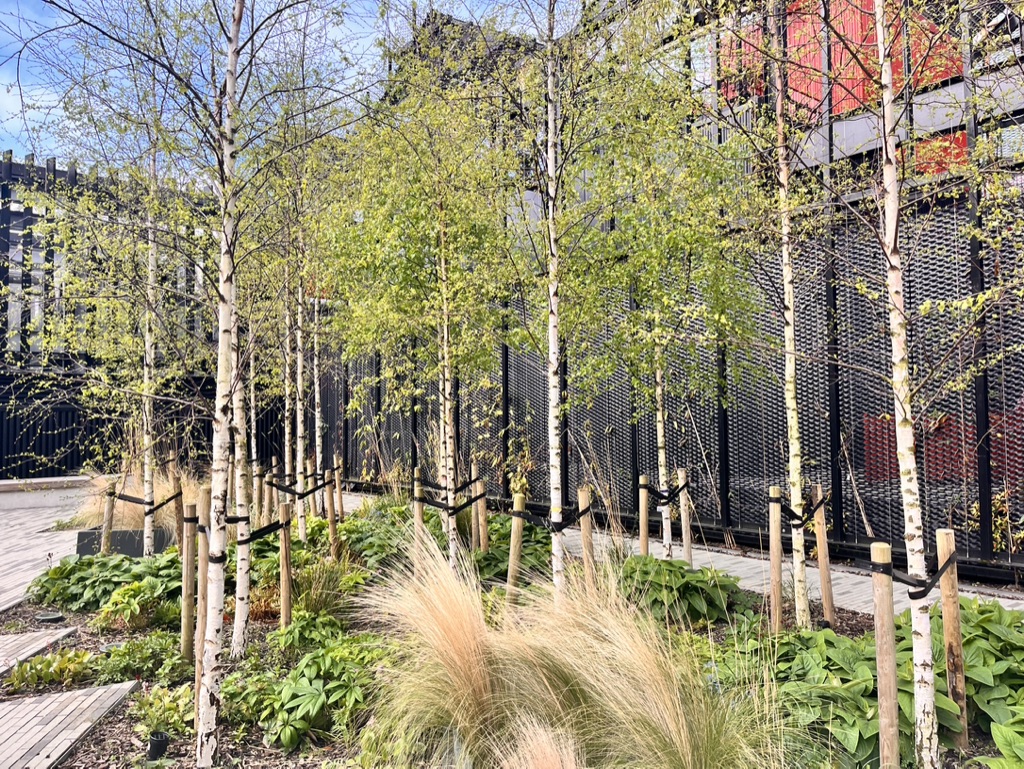
For CMMR, we present a new soundscape composition consisting solely of field recordings that capture internal data centre sounds, as part of a collaborative research project of listening to the digital city. As researchers in sound and media studies, we are interested in the concept and aesthetics of ‘ambience’ as they are applied in relation to digital and computational infrastructures , and in their resonances with notions of ambient music, sound and listening. In sharing these recordings, we invite a listening with the ‘phono-materiality’ of the data centre, which stands as an intensely compressed site of power in the current era of surveillance capitalism, and yet as an externally quiet, concealed space, hiding in plain sight in the heart of urban centres.
Bio:
Dr. Iain Findlay-Walsh (he/him) is a sound artist, researcher and teacher exploring sound-based methods for the study of personal listening. He teaches sound art and sound studies at University of Glasgow, co-directs Immersive Experiences Lab on digital media reception, and is an editor of the music and arts journal openwork (University of Columbia).
Rebecca Noone is a Lecturer (Assistant Professor) in Digital Media and Information Studies in the School of Humanities, University of Glasgow. She is interested in the interplay between the banal experiences of using digital media and the popular discourses and fantasies that animate contemporary digital culture. Her book, Location Awareness in the Age of Google Maps (Routledge), complicates a popular lament that we have ‘lost our sense of direction’ to Google Maps, to think about the taken for granted forms of location awareness that endure.

Abstract:
It Falls From Out The Woods began as a clarinet and modular synth improvisation between Elaina and Harry which we then turned into an ambisonic composition. The title and the spoken word during the composition come from the Violet Jacob poem “The Bird in the Valley” about loss and grief told through the analogy of a singular bird cutting through the dark of night. The composers, both being bird-enthusiasts and nature lovers, wished to write about the impact humans have on animals and particularly birds. According to the RSPB and the National History Museum, 40 million birds have disappeared from UK skies since 1970 and the UK only has half of its natural biodiversity left. This is predominantly due to human infrastructure and the loss of natural habitats. Similarly, the human elements throughout the piece such as the breaths, spoken word, and sounds of traffic are what cause destruction and change. The clarinet material was inspired by bird calls such as cuckoos and owls. The spatialisation is an ode to flight, using flocking textures based on Craig Reynolds’ “boids” algorithm to simulate bird-like murmurations. The composers chose not to use real recordings of birds, hinting instead at a dystopian future where we can only imitate what once was real, and pay homage to what is lost. One day there may not be another bird call. In this way, the work encourages retrospection on the actions and choices humans have made and reminds the listener to not take the natural world for granted and to protect it. This work was composed with Reaper, Max/MSP, Logic Pro X, Elaina on clarinet and Harry on the modular synth.
Bio:
Elaina is a postgraduate composition and clarinet student at the Royal Welsh College of Music and Drama studying with Dr Milad Mardakheh, Michael McCartney, Ceri Tippetts, and Nicholas Carpenter. She also completed her undergraduate degree here, receiving a First Class Honours in Composition. Elaina specialises in electroacoustic/computer music and mixed media, as well as instrumental composition, with an emphasis on spatial audio and granular synthesis. Her work is often centered around her Max MSP patches and exploring source-bonding. She contrasts the familiar and unfamiliar, challenging an audience’s perception and relationship to sound. On May 9th 2025, she produced, directed, and composed the music for a multidisciplinary show, “Seasons”, in the Richard Burton Theatre as part of Atmospheres Festival 2025. Elaina is currently composing for Britten Sinfonia as part of their Opus 1 scheme.
Harry Rees is an emerging Irish composer and pianist from County Fermanagh, Northern Ireland. They received a First Class Honours degree in Composition from the Royal Welsh College of Music and Drama, where they studied under Michael McCartney and Ceri Tippetts. Their professional experience to date has included being shortlisted by the BBC National Orchestra of Wales for Composition: Wales in March 2025, working alongside Britten Sinfonia as part of their Opus 1 scheme for composers in summer 2024, and having their music performed in the Penarth Chamber Music festival by the Neary-Adams String Trio. Harry has also enjoyed having their work workshopped and performed by ensembles such as Sinfonia Cymru (String Quartet No. 2), The Hermes Experiment (Nachtmusik), and the Neary-Adams String Trio (String Trio No. 2). Harry is currently working alongside the Philharmonia Orchestra as a composer fellow for their Composers’ Academy. Often inspired by extramusical influences such as birdsong and poetry, Harry’s electroacoustic and acousmatic music is centred around the concept of surprise and sudden change, creating vast and ever-shifting sonic spaces, whilst their notated music focuses on combining tonal and non-tonal elements, blended with timbral techniques and fluid rhythms to create a kaleidoscopic range of shifting instrumental colours.

Abstract:
What if we make the background foreground? What if the sounds of the past resonate through the present? What if the hidden details, the disguised features, the traces and the artefacts, break out of the everyday noise we tend to ignore and tell a story of space, place and presence? PRESENCE | NÆRVÆR was an outdoor, site-specific sound installation that explores these questions. The installation was the forth in a series of site-specific outdoor works that investigate if it is possible to evoke a new awareness of everyday sound landscapes by enhancing what is already present with an art-science approach to composition and high resolution 3D sound. The work was part of the Reconfiguring the Landscape project.
Bio:
Natasha Barrett (NO/UK) is a composer, new media artist and researcher. She creates acousmatic, electronic, and live-electroacoustic music, public-space sound installations and audiovisual works. She is widely recognised for her artistic exploration of 3D sound and ambisonics. Her work is commissioned and performed worldwide and has received awards in over 30 international competitions, including the most prestigious prize available for Nordic composers, the Nordic Council Music Prize. In addition to her solo career, she regularly collaborates with performers, visual artists, architects, and scientists, often drawing on data emulating or created by real-world processes as a source for artistic exploration. Some of the highlights include 3D audiovisual artworks with the USA-based OpenEndedGroup, science-art sonification in collaboration with geoscientists, and live electronics collaborations with many soloists and ensembles. She has held professorships and research positions in Norway and Denmark and now works freelance.

Abstract:
Swifts of Pesaro
In November 2023, while preparing for the premiere of a large orchestra and live electronics composition I had some days off from the intensity of performance, people and concert halls. To unwind, I visited a few of the recordings I made during the warm nights of Pesaro (Italy) earlier in the summer. Experimenting with these recordings resulted in ambient and immersive soundscapes, which, unlike the high-energy composition materials I was currently working on, I didn't really think much more of. It was also a mediation amidst the destruction wreaking havoc in the world in the end of 2023. Later on I played these slow-moving sounds to a friends who suggested that they could live on in a short composition. The result is 'The Swifts of Pesaro.' Dedicated to eco-acoustics researcher and sound artist David Monacchi.
Toxic Colour
Mining. Construction. Industry. Cleanup or coverup? The first outdoor exhibition showcasing aerial photography that captured the human impact on natural landscapes was "The Earth from the Air" by French photographer Yann Arthus-Bertrand, shown in Paris in 2000. The paradox of these mesmerising photos, in contrast to the often ravaged human-altered landscapes that they capture, has become the theme of many photo-art projects. Despite my being repeatedly drawn to such stunning imagery, their statements are becoming lost in our oversaturated world of digital visual media. I thought it was time to make a statement in sound. Toxic Colour was commissioned by EAU with support from Arts and Culture Norway.
Bio:
Natasha Barrett (NO/UK) is a composer, new media artist and researcher. She creates acousmatic, electronic, and live-electroacoustic music, public-space sound installations and audiovisual works. She is widely recognised for her artistic exploration of 3D sound and ambisonics. Her work is commissioned and performed worldwide and has received awards in over 30 international competitions, including the most prestigious prize available for Nordic composers, the Nordic Council Music Prize. In addition to her solo career, she regularly collaborates with performers, visual artists, architects, and scientists, often drawing on data emulating or created by real-world processes as a source for artistic exploration. Some of the highlights include 3D audiovisual artworks with the USA-based OpenEndedGroup, science-art sonification in collaboration with geoscientists, and live electronics collaborations with many soloists and ensembles. She has held professorships and research positions in Norway and Denmark and now works freelance.
Abstract:
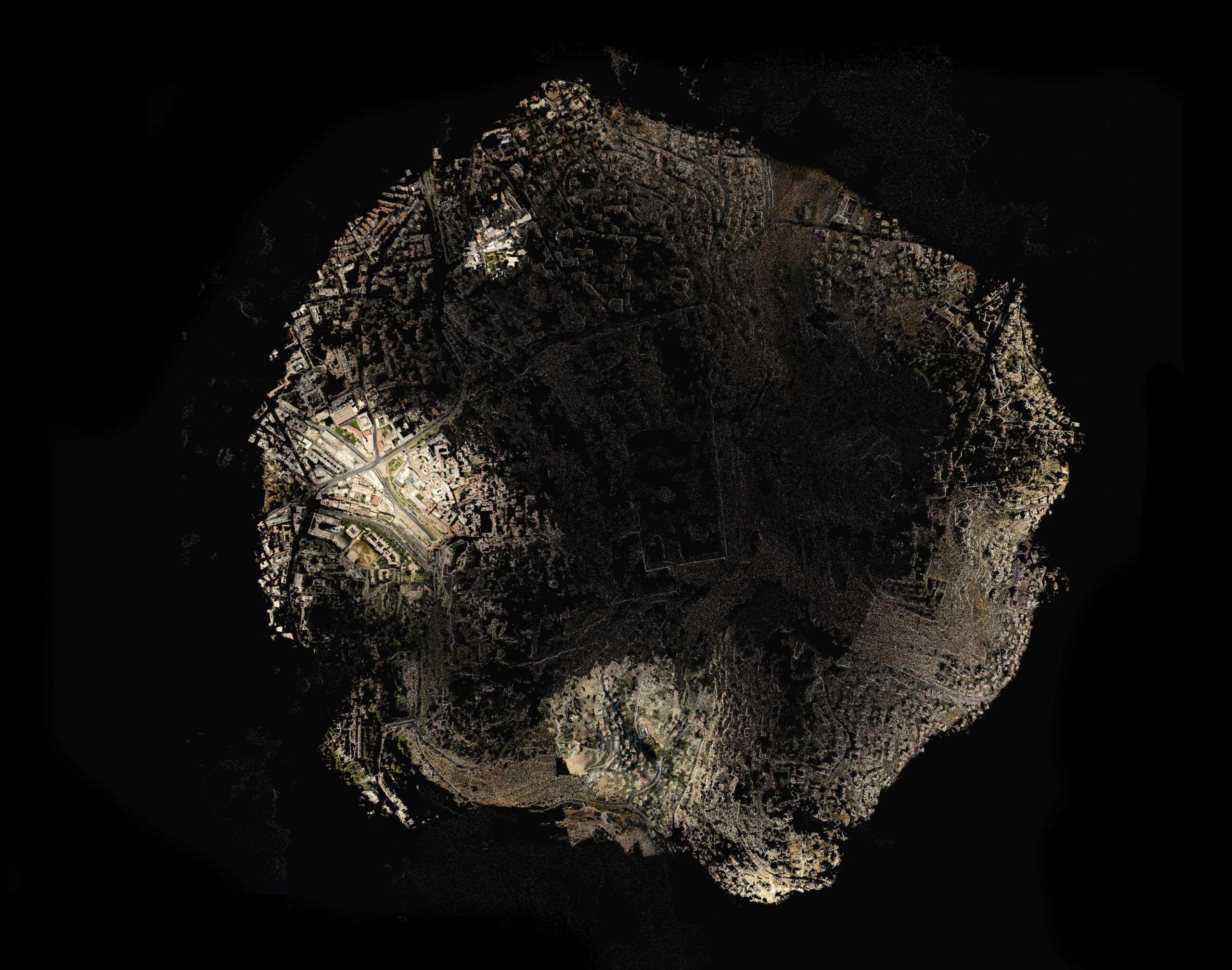
Terra ex Machina uses drone image data and perceptual composition to explores the pervasive restrictions on vision & movement, a digitally enforced blackout around Jerusalem’s temple mount area.The production of the Video and Sound work was supported by the Institut für Auslandsbeziehungen e. V. (ifa) as part of the project ARE YOU FOR REAL
Collaborators
Sound Composition and Design: Francisco Mazza
Knurl (prepared cello): Rafaele Andrede
Drone photography: Hagit Keysar & Barak Brinker
Kite & Balloon photography: Hagit Keysar, Shai Efrat, Jeffrey Warren (PublicLab), children from Wadi Hilwe, Silwan
Bio:
Ariel Caine is a Jerusalem-born artist and researcher. His practice centres on the intersection of spatial (three-dimensional) photography, modelling and survey technologies, and their operation within the production of cultural memories and national narratives. Ariel is currently a Postdoctoral fellow at the ICI Berlin, undertaking his project “Architectures of the Sensed: Models as Augmented Sites for Resistance”. He received his PhD from the Centre for Research Architecture, Goldsmiths University of London where from 2016–21 he was a project coordinator and researcher at the Forensic Architecture Agency. In 2021–22 he received a postdoctoral research grant from Gerda Henkel Stiftung as part of the speculative cameras and post-visual security projects at Tampere University (Finland).
Hagit Keysar is a researcher and activist, working and teaching in the fields of science and technology studies, critical data studies and digital urbanism. Her research and creative work concern the politics of data and digitization and the political potentials of community-driven science and technology for articulating rights in situations of conflict and colonisation. She has recently been a research fellow at the Weizenbaum institute for the Internet society, Berlin (2019), a postdoc fellow of the Minerva Stiftung (2019-2021) in Berlin’s Natural History Museum and she is currently a postdoc at the Minerva center for Human Rights at the Tel Aviv University.
Francisco Mazza is a Brazilian sound artist, filmmaker, and researcher based in London—his work centres on listening as a creative, critical, and spatial practice. Winner of the 2024 BAFTSS Award for Best Practice Research for his film Notes on Listening, he investigates how sound shapes perception, place, and collective experience. His practice brings sonic thinking and methodology to film sound, radio art, interactive installations, and architecture. Mazza reimagines sound as a mode of inquiry—one that listens back to the world, amplifying its ambiences and unseen narratives.
SOUNDHOUSE at V&A East Storehouse
Wednesday 3 – Friday 7 November
FREE TO ATTEND More information HERE
LIVE PERFORMANCES : MAIN STAGE
Thursday 6 November 18:00 – 22:00
Abstract:
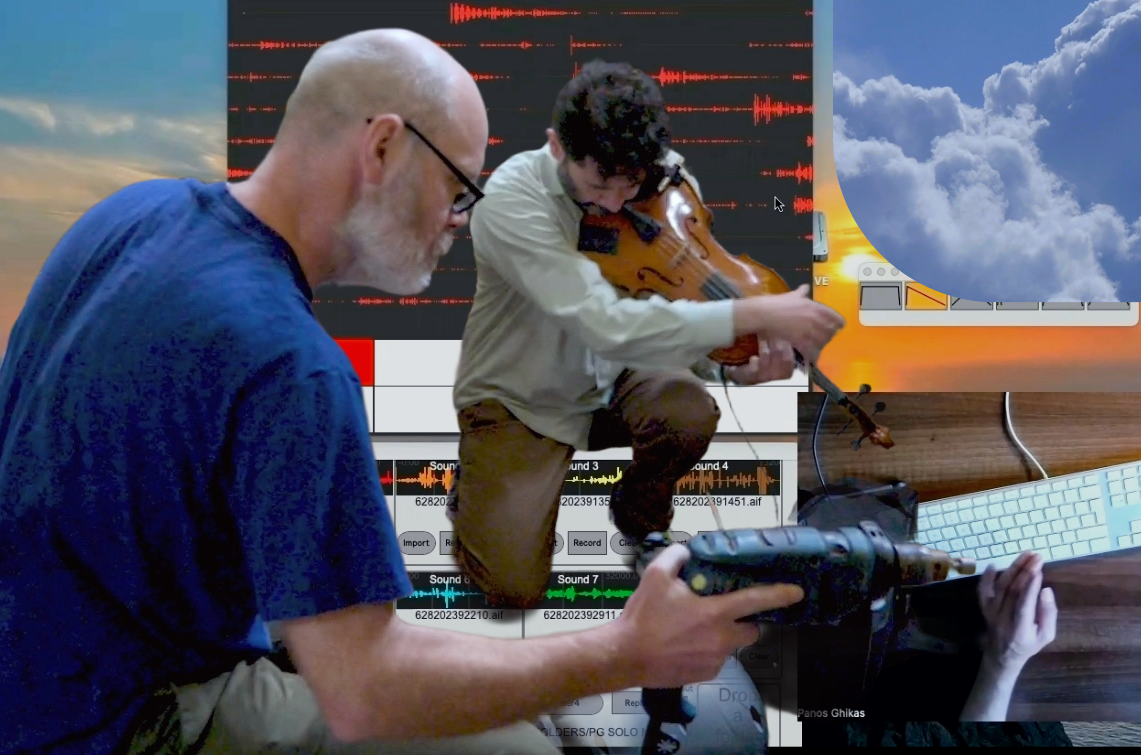
“Time unreal situation” is an improvised performance by Dan Herbert and Panos Ghikas, using the audiovisual software Unrealtime. Featured in releases such as Ghikas & Walshe’s “Good Teeth” and Matmos’s “The Consuming Flame,” the software provides a simple visual interface for live audiovisual navigation and resequencing.This piece will be developed from directly sampling objects from the Storehouse and working with students in a workshop on the 23rd October.
Bio:
Daniel Herbert is a Lecturer in Music (Music Production) at the School of Sciences, Psychology, Arts & Humanities, Computing, Engineering & Sport, Canterbury Christ Church University.
Panos Ghikas (b. 1972, Athens, GR) is a London-based composer, improviser and producer. His output encompasses concert music, live improvisation, interdisciplinary collaborations in digital media, film music and pop production. He is a member of surrealist post-pop band The Chap (7 albums, over 400 performances internationally since 2000) and runs Migro Records (est. 2011), a label that releases work that falls into the intersection between composition and free improvisation. Panos performs and releases with Jennifer Walshe in improv duo Ghikas and Walshe and performs violin and viola in groups Friendo and Unreal-time Group. His work features in over 60 releases (Universal, EMI, Lo Recordings (UK), Ghostly International (US) and Staatsakt (DE) and has been performed and broadcast internationally. His music for screen features in TV programmes and commercials around the world and is available through the Universal Production Music library. Remix credits include artists such as Gotye, Beck, Block Party, Tom Vek amongst others. His acoustic compositions have received performances in the UK, Germany, Belgium, Greece and Mexico, by performers such as the Arditti Quartet, Ensemble Exposé, the Kreutzer Quartet and Christopher Redgate.
Abstract:
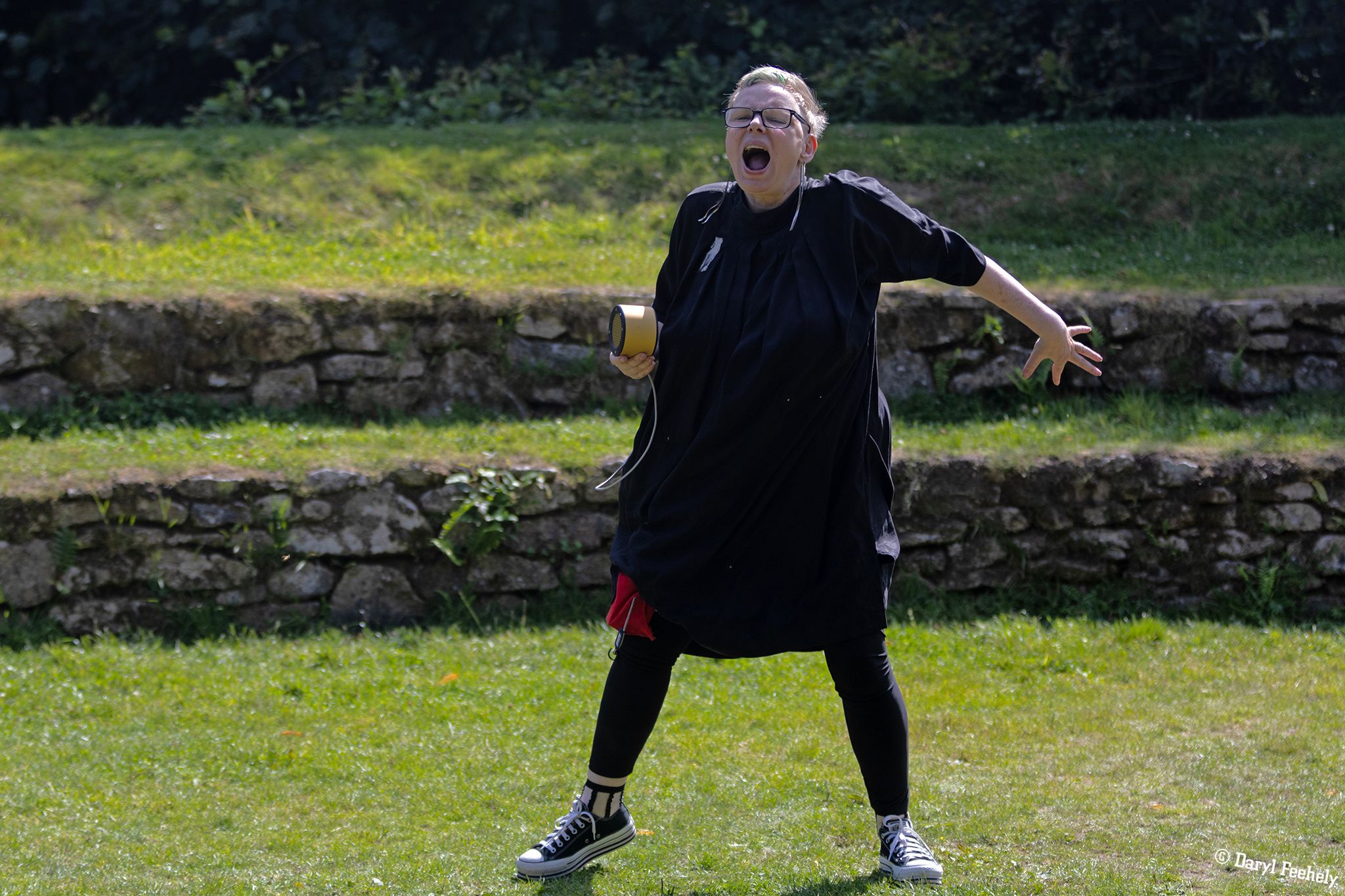
Embodied Dialogues is a collaboration between Jenn Kirby and Iris Garrelfs merging movement, wearable tech, and improvised voice. Garrelfs wears Kirby’s Sensor Dress, triggering site-specific sounds via motion and touch as she moves through the space, creating an intimate, immersive sonic experience.the processing of site-specific pre-recorded sounds that are amplified with a hand-held speaker, while her voice remains unprocessed and unamplified
Bio:
Iris Garrelfs is an artist working on the cusp of music, art and sociology. Her practice includes fixed media, installation, improvised performance and has been included in major institutions worldwide, for example Tate Britain, National Gallery, Barbican, Onassis Centre Athens, Visiones Sonores Mexico, Gaudeamus Amsterdam, MC Gallery New York. Elsewhere she is the commissioning editor of the online journal Reflections on Process in Sound and the co-curator and director of Sprawl, a London based experimental music organisation. Iris has a PhD in Sound Art from University of the Arts London and is senior Lecturer in Sonic Art at Goldsmiths, University of London.
Jenn Kirby is a composer, performer, and creative technologist. Creating hybrid musical instruments using software, sensors, and repurposed controllers, Jenn’s music engages with physicality and the body, often intersecting with performance art and movement. Commissions include work for Irish National Opera, New Music Dublin/Evlana, Crash Ensemble, Kirkos Ensemble, Glasshouse Ensemble, Light Moves Festival, Larissa O’Grady and Ensemble Entropy. Jenn’s work has been described as “digital surrealism,” “intoxicatingly strange,” and “a sonic meditation on the fleeting temporality of embodied existence.” Jenn's current work focuses on agency and the interaction between sound, the body, and technology in wearable instrument design.
Abstract:
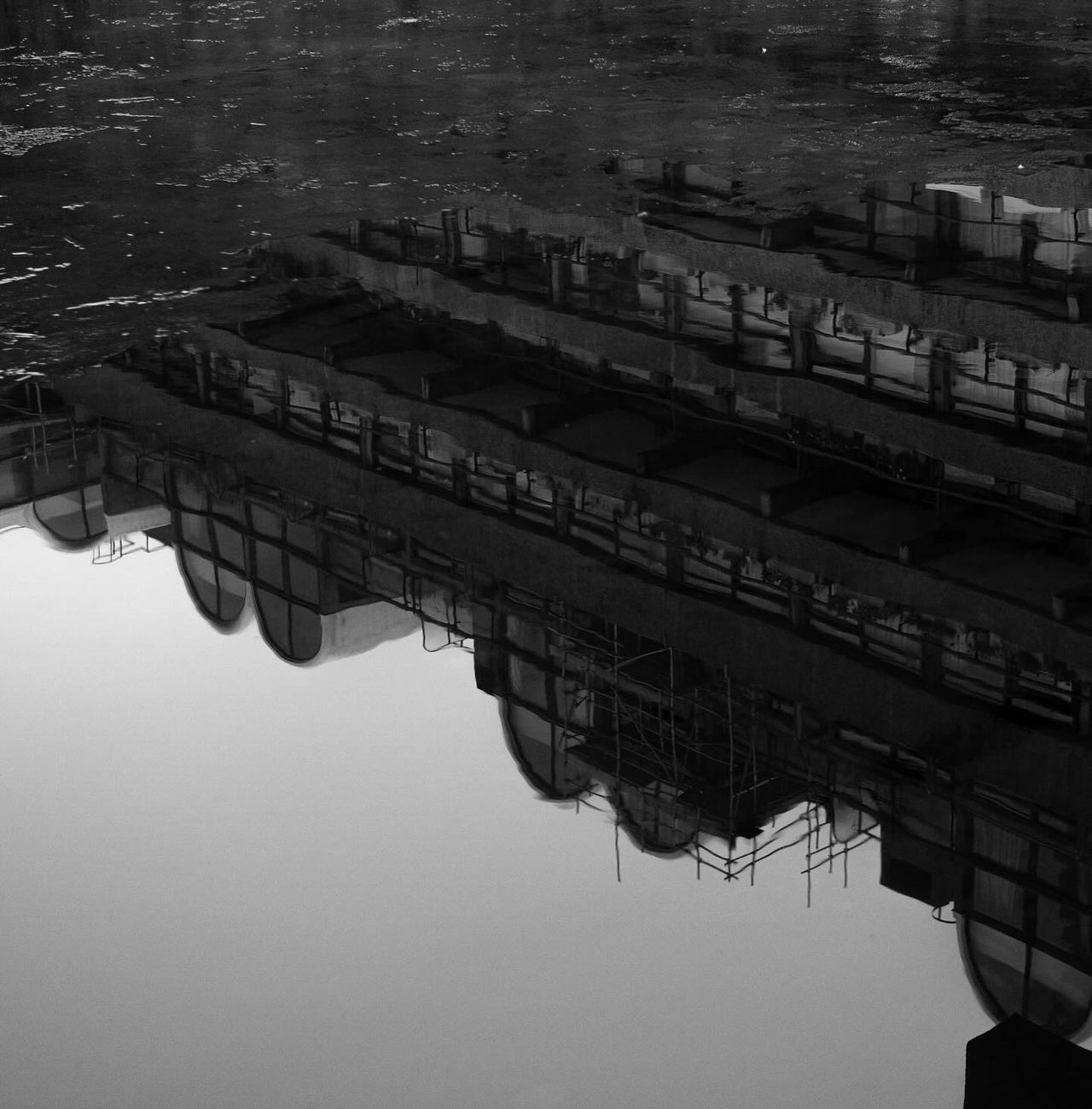
Concrete Dreams of Sound explores the Barbican Estate’s Brutalist architecture as an active collaborator. Using contact microphones, vibrational speakers, and re-amplified recordings, the work investigates how sound interacts with materials and space, revealing the building’s resonant and spatial qualities in a site-inspired performance. Additional members of team: Gascia Ouzounian.
Bio:
Gerard Gormley is an Irish composer and sound artist whose work investigates the sonic potentials of space, architecture, and place. His practice evolves through experimental processes that explore how sound interacts with spatial and material environments. Much of his work unfolds at a granular level, attending to microsonic and microtextural detail. His recent album and installation project Concrete Dreams of Sound channels audio through building materials using contact microphones and vibrational speakers. Sounds were recorded in situ, through concrete, water, and air, and subsequently reinserted into those same spaces, creating recursive, site-specific compositions. The work reveals how built materials mediate, filter, and transform sonic energy, proposing a mode of composition that is fundamentally architectural: a practice of listening with and through matter. The Quietus writes that the album’s ‘alternation between voluminous hum and gossamer-thin but rich textures instils a sense of elegant dynamism… conjuring a transportive experience.’ Gormley’s work has been presented at The MAC Belfast, Modern Art Oxford, DAAD Gallery (Berlin), Café OTO (London), After (Berlin), XMTR and Sono-Electro Festival (St Leonards-on-Sea), Cannes Festival, Storung Festival (Spain), The Cube at Virginia Tech, and Sonorities Festival (Belfast), and has been broadcast nationally on cinema and television in Ireland and the UK. He is Senior Lecturer in Audio and Music Production at Buckinghamshire New University.
Abstract:
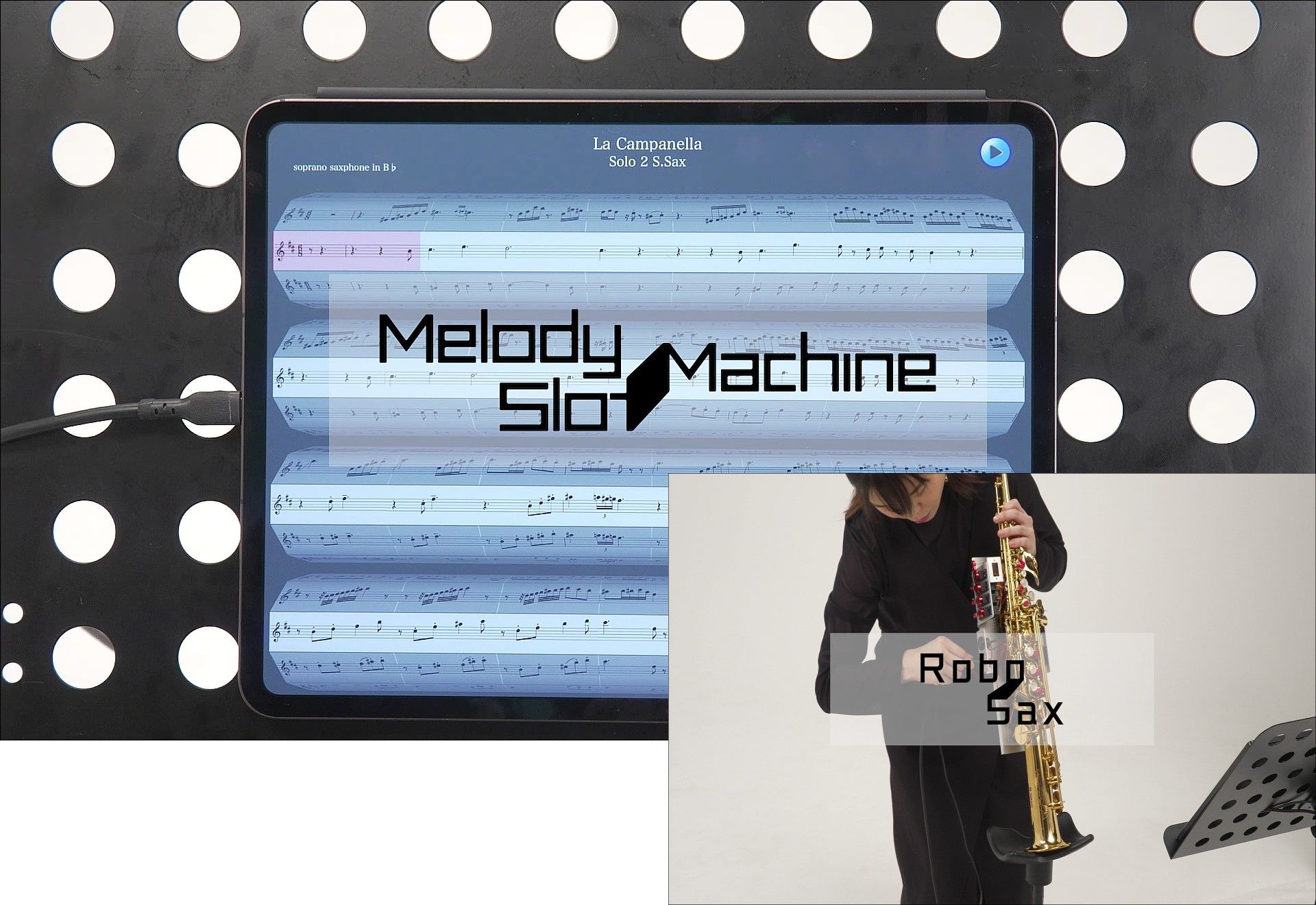
Melody Slot Machine is a dial with the staves of music displayed on the iPad, which can be rotated to change the melody variations. The melody variations are generated on the basis of the Generative Theory of Tonal Music (GTTM). The melody variations in Melody Slot Machine, generated on the basis of GTTM, can be partially switched to another variation without any significant change in the overall structure of the time-span tree and no musical breakdown. The fingering of the melody with variations changed using Melody Slot Machine is automatically performed by the microcomputer and servomotor attached to the saxophone. The microcomputer receives the MIDI Note on signal output from Melody Slot Machine and moves the servomotor so that the fingering corresponds to the note number. The saxophone keys and servomotors are connected by wires. When the servomotor is moved and a wire is pulled, the key moves and the tone hole closes.
Bio:
Masatoshi Hamanaka received PhD degree from the University of Tsukuba, Japan, in 2003. He is currently a leader of Music Information Intelligence team in Center for Advanced Intelligence Project, RIKEN. His research interest is in music information technology, biomedical and unmanned aircraft systems. He received the Journal of New Music Research Distinguished Paper Award in 2005.
Abstract:
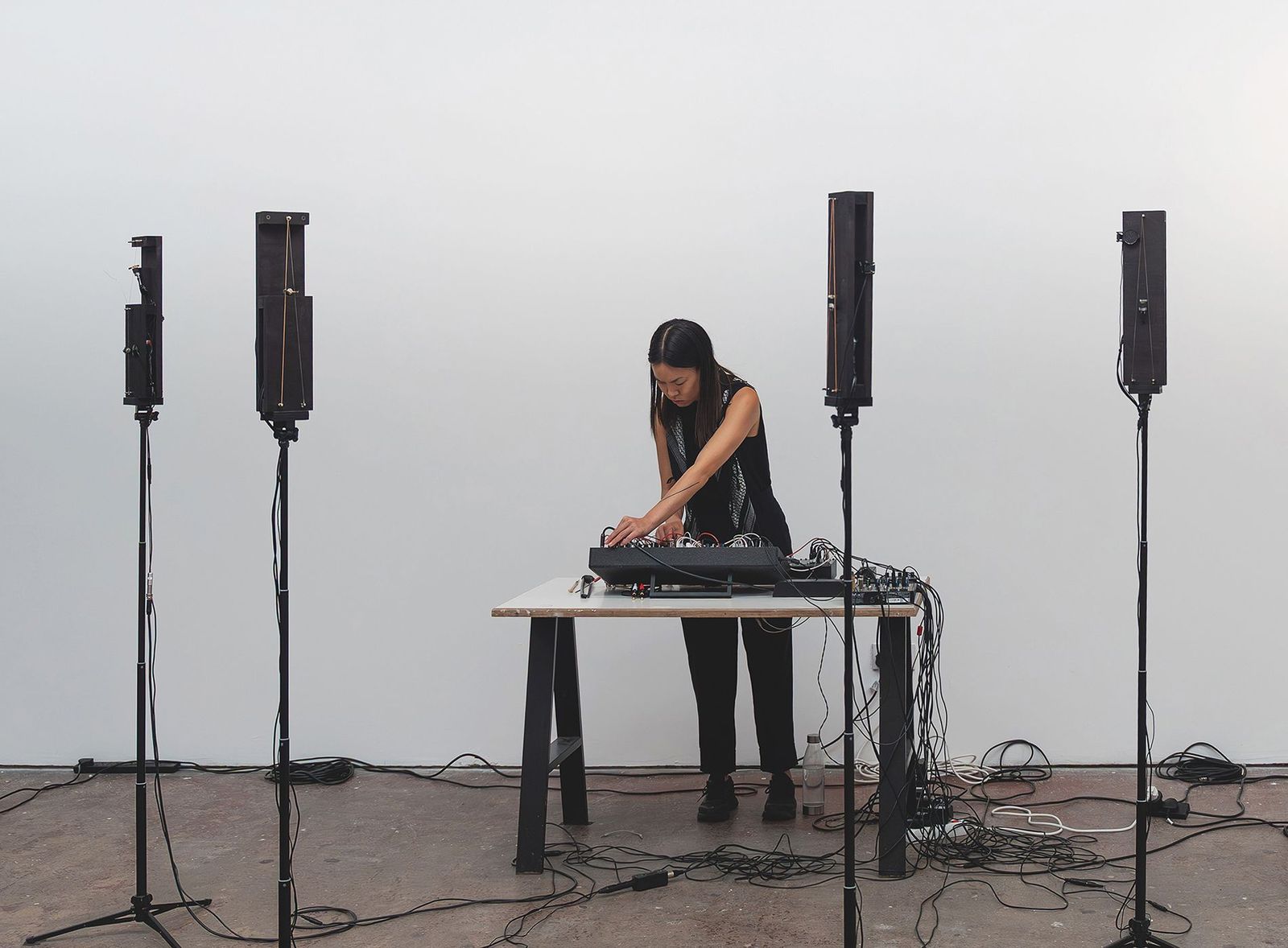
A live performance investigating how spatial arrangement, and phonetic articulation shape perception and ecological awareness. Through motorised sound sculptures, live electroacoustic synthesis, and field recordings, the work positions listening as a method of inquiry into displacement, memory, and acoustic environments.
Bio:
Florence To (b.1985) is an artist and director creating acoustic scenographies and audiovisual installations with an emphasis on architectural spatial design. They specialised in textiles and tailoring for five years before combining their skills with digital and computational technologies to create installations in abandoned and disused spaces, utilising their defects. Working in an array of architectural environments led them to further investigate the implications of cognitive and emotional triggers, as well as how diverse sensory arrangements are perceived within space. To uses information in relation to vibrations, including psychoacoustics and phonetics to develop multidimensional processes in their practice. They have established residencies and commissions with the Berliner Festspiele, STRP Eindhoven, Mass MoCA in Massachusetts, EMPAC (Experimental Media and Performing Arts Center) in New York and The Spatialization and Auditory Display Environment [SpADE] in Limerick. In 2019, they worked with the Photonics group at the International Iberian Nanotechnology Laboratory in Portugal, exploring the science behind light detection, generation, and manipulation, and understanding how wavelength propagation processes can enable humans to rationalise the behaviour of their internal optics. Informed by visual and acoustic ecology, and phenomenology, their creative endeavours are founded on the significance of listening as a valuable tool for aligning with and establishing deeper connections with the worlds we occupy, particularly during a period of ecological upheaval. Their work aims to break down the barriers that exist between various artistic disciplines and to foster multidimensional exchanges within creative practice among communities.
Abstract:
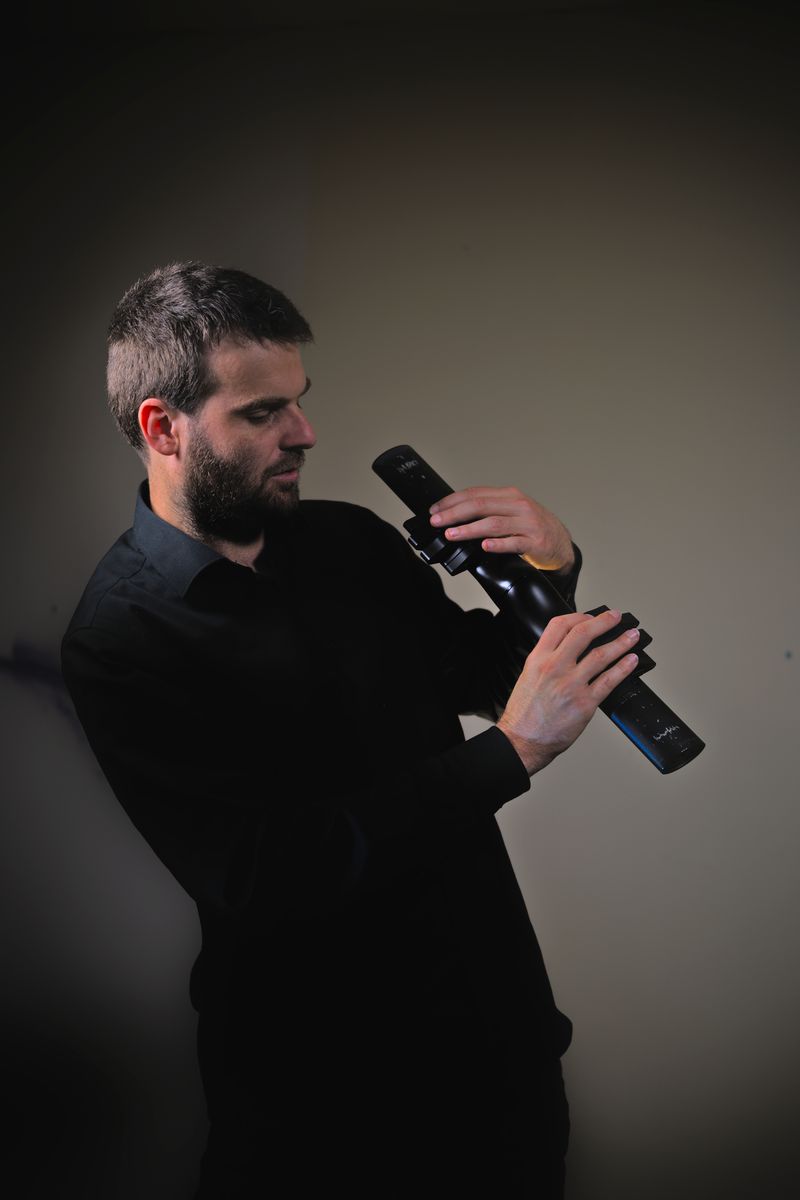
The Karlax is a digital musical instrument that looks like a clarinet. This work explores expressiveness in the interactions between sounds, gestures, and spaces, with the hope of creating a peaceful hybrid environment.
Bio:
Composer and guitarist, Benjamin Lavastre trained at the Haute Ecole de Musique de Genève with Michaell Jarrell, Luis Naón, Eric Daubresse and Pascal Dusapin, and at the Hochschule Weimar with Michael Obst. He is currently pursuing a doctorate (PhD) at McGill University in Montreal with Philippe Leroux. His works have been performed by such prestigious ensembles and conductors as the MDR Symphony Orchestra, the TANA Quartet, Quasar Saxophone quartet, Duo Airs, Ensemble Éclat, Lorraine Vaillancourt, Guillaume Bourgogne, Kanako Abe and Ullrich Kern, as well as part of the MNM, Archipel, ZKM and Impuls festivals among others. He won the Conseil de Genève Prize in 2018 and the Paléo Festival de Nyon Prize in 2020. He is a laureate of the Fonds de Recherche Québécois and the Hans Wilsdorf Foundation. He is interested in digital music instruments, in particular the Karlax, and their ability to interact with acoustic instruments. Also a guitarist, he plays a varied repertoire ranging from contemporary music to jazz. His works are published by Babelscores.
Abstract:
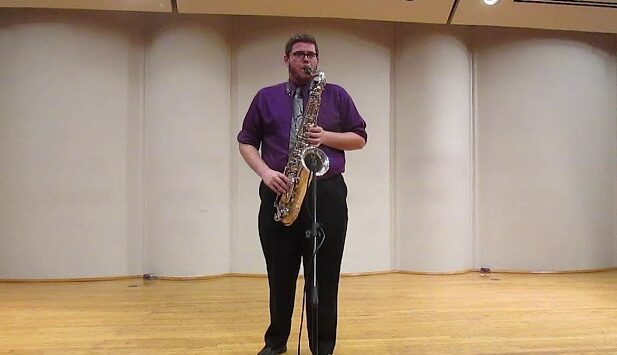
This mini concert presents two works created 10 years apart. “Loose Canon” presents a stochastically scrambled formal structure to an improvising saxophonist. “Accelerationism” is a quadraphonic keyboard piece premiered by the composer at the Woodstockhausen Festival. Timbre indeterminacy is an important aspect of both pieces, and “Accelerationism” leans into the disorienting effects of spatial distribution of sound.
Bio:
Eric Lyon is a composer, computer musician, spatial music researcher, audio software developer, and curator. In the 1980s, Lyon developed a wide range of new signal processing strategies for modifying both synthetic and acoustic sounds, including a wide range of spectral processors based on Fourier analysis. In the 1990s, he developed algorithmic approaches to sound design that resulted in increasingly complex and unpredictable timbres. In parallel, he began working with live processing of acoustic sounds, first with the Kyma system, and next with Max/MSP, ultimately writing a large collection of his own Max/MSP audio plugins (also called “externals”)
INSTALLATIONS : GALLERY 1
Wednesday 3 – Friday 7 November (daily), 09:00 – 18:00
Abstract:
Student group work from Design for Performance & Interaction MArch @ UCL
Students: Skylar He \\ Chengying Li \\ Yufeng Hu \\ Rixin Wang (Wrench 2 Studio)
Tutors: Paul Bavister \\ Parker Heyl \\ James Wilkie
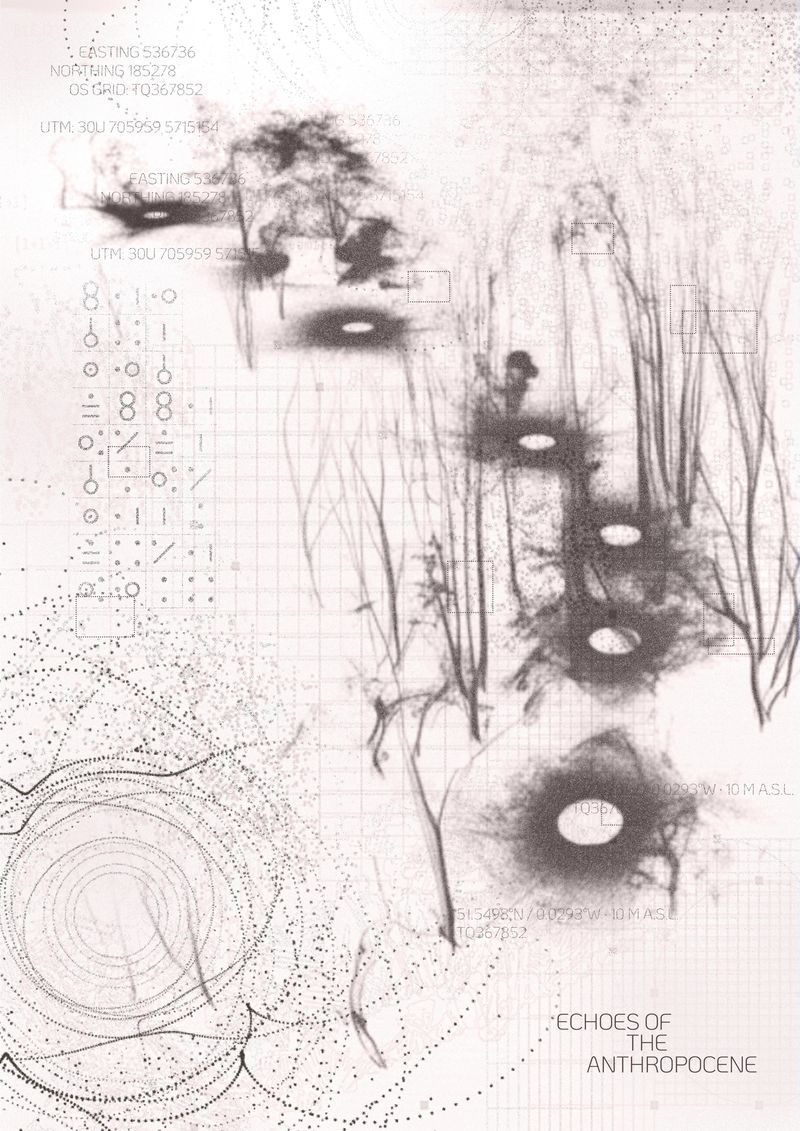
Spoken from a speculative future, Echoes of the Anthropocene treats current soundscapes as a forming archive. Through acoustic archaeology, multichannel diffusion, robotic inscription in clay, and point-cloud visualization, it materialises fragile sonic heritage while rendering haptic and visual traces that prompt reflective navigation
Bio:
Wrench 2 studio is a cross-media & interactive design group

Abstract:
Whose keys are these? (2025)
Chun Hoi Wong, Carlos Bandi, Locrian Li, Guoge Yang, Diamante Patterson, Yu Liu
Inspired by the keys from the David Bowie Archive, we wonder how a key might recall personal history through its sound. “Whose keys are these?” is a documentation recording of a game in which blindfolded participants attempt to identify their own keychains solely by the everyday jingle they hear countless times, recognizing this familiar sonic quality and auditory memory. It explores how such personal objects might reflect collective narratives beyond the locks they open.
Blue and White: Chronicle of Water (2025)
Qianbei Chen, Mingyi Cai, Xin Li, Xiyao Tu, Yixuan Hu
Drawing from the V&A’s Blue-and-White Qing porcelain collections and its historical background of the turbulent Ming-Qing dynastic transition, this audio work translates the vase’s azure glaze into the auditory language of water. Water then becomes a metaphor for culture, flowing through historical rupture to whisper a timeless truth: culture, like water, does not vanish in moments of upheaval; it runs deep, and endures.
The object poisons sight. Let it be hid (2025)
Chinma Johnson-Nwosu. Maya Feldman, Yuze Wang, Poppy Wu, Nana Nakashima
Voice as sound. As sound hidden, obscured, resurrected, and embodied. Which voices are present in an archive, and which voices are excluded? Using found sounds, spoken text, and performance material, we explore the polyvocality of Othello’s neck chain as worn by Laurence Olivier in the Old Vic’s 1964 staging of the Shakespeare play
Where Sound Remembers (2025)
Jingfang Sun, Cora Wang, Xiaochen Sun, Yuchen Liu, Xishu Zhao, Andres Pellegrino
Performance is an ephemeral art that exists only in the moment of its happening. Yet, through sound design as a form of creative archive, we explore how traces and detritus of performance—beyond traditional Western archival forms—can evoke memory and reconstruct its presence. Inspired by the Burmese violin from the V&A collection, an instrument deeply rooted in performance and cultural expression, it embodies the traces of sound and gesture that once existed in live practice. We see it as a bridge between the act of performance and the lasting resonance preserved through sound design.
INSTALLATIONS : GALLERY 2
Wednesday 3 – Friday 7 November (daily), 09:00 – 18:00
Abstract:
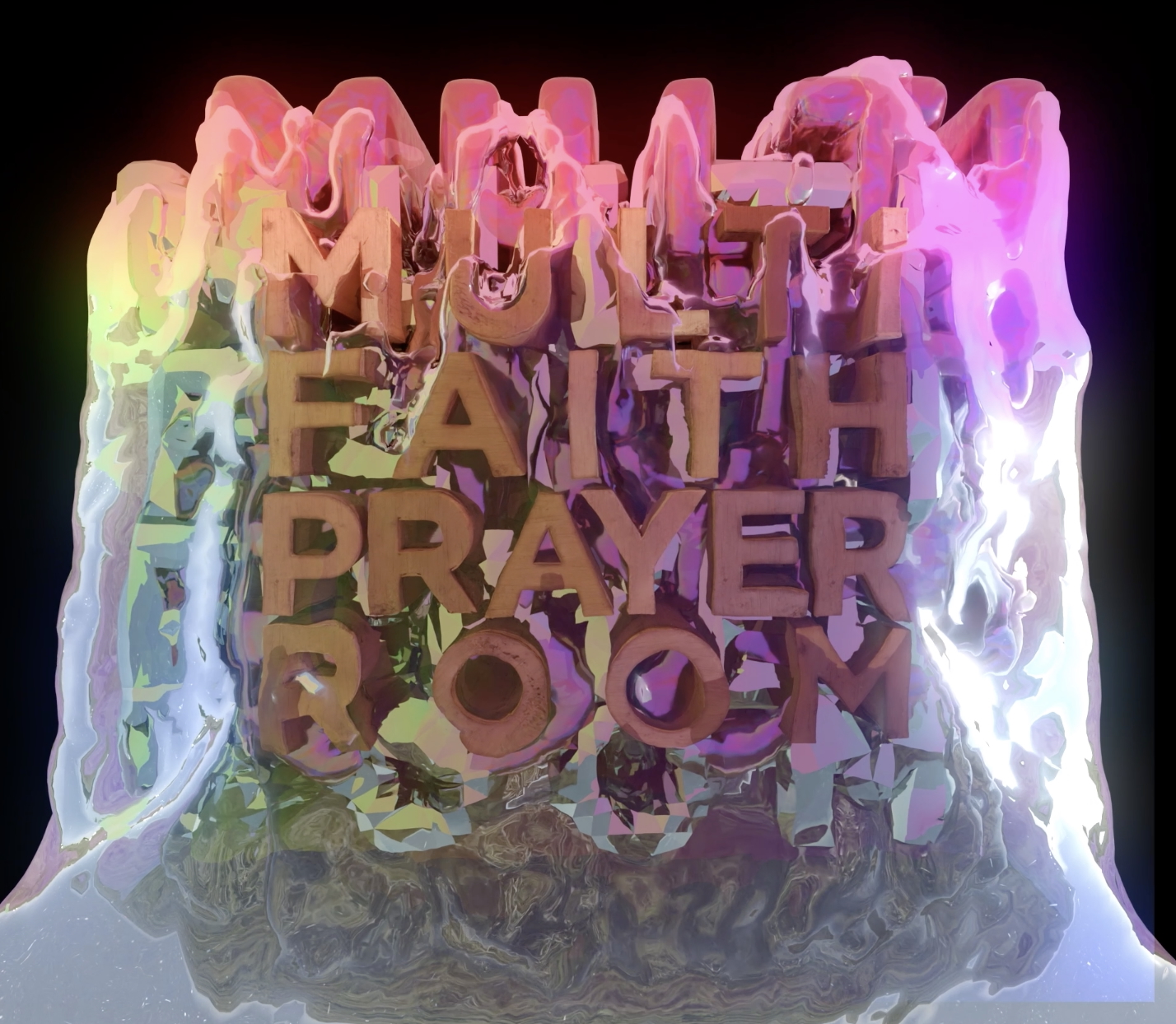
Multi Faith Prayer Room is a black box of wishes and hopes, a cross-disciplinary project that collects todays utopian ideas and future desires from people and transforms them into a polyphony of inclusivity. At the center of MFPR is a data base made up of pre-recorded statements by people from all cultural contexts – encompassing nationalities, genders, and ages. By entering the Multi Faith Prayer Room, one can listen to their voices and become inspired by the multitudes of approaches how to face the 21st century. The ever-expanding installation consists of 120 voices from around the world talking about faith, rituals and future providing an intimate insight into the momentary state of the human mind in 2025.
Created by Daniel Brandt \\ content director: Max Dax, Daniel Brandt \\ composition: Brandt Brauer Frick, Marina Herlop \\ vocals: Marina Herlop, Heidi Heidelberg \\ collage: Paul Frick, Daniel Brandt, Anna Friedberg \\ produced by STRRR, Robot Heart Foundation, Brandt Brauer Frick \\ Funding credits: Robot Heart Foundation.
Bio:
Daniel Brandt is an audiovisual artist, filmmaker, composer, and drummer based in London and Berlin. His work explores the interplay of sound, image, and space across film, installation, and performance. As co-founder of the ensemble Brandt Brauer Frick, he has performed over 400 concerts worldwide — from Coachella, Glastonbury, Sonar, and Montreux Jazz Festival to the Berlin Philharmonie, Lincoln Center New York, Berghain and the Royal Albert Hall — blending classical instrumentation with electronic club culture. His solo projects merge live cinema, multichannel sound, and immersive installations. His 2025 audiovisual stage work “Without Us”, commissioned by the Barbican Centre, fused film, light, and electroacoustic music into an apocalyptic live cinema experience. His sound installation “Multi Faith Prayer Room”, premiered at Art Basel Miami, created a space of collective listening and reflection using voices from 35 countries. Brandt’s films and music videos have screened at Berlinale, the Oberhausen Short Film Festival, New York Independent Film Festival, and others. In 2017, he founded Strrr.tv, a curated online TV platform for anti-algorithmic media exchange. His practice consistently pushes the boundaries between analogue and digital, music and image, structure and spontaneity.
Abstract:
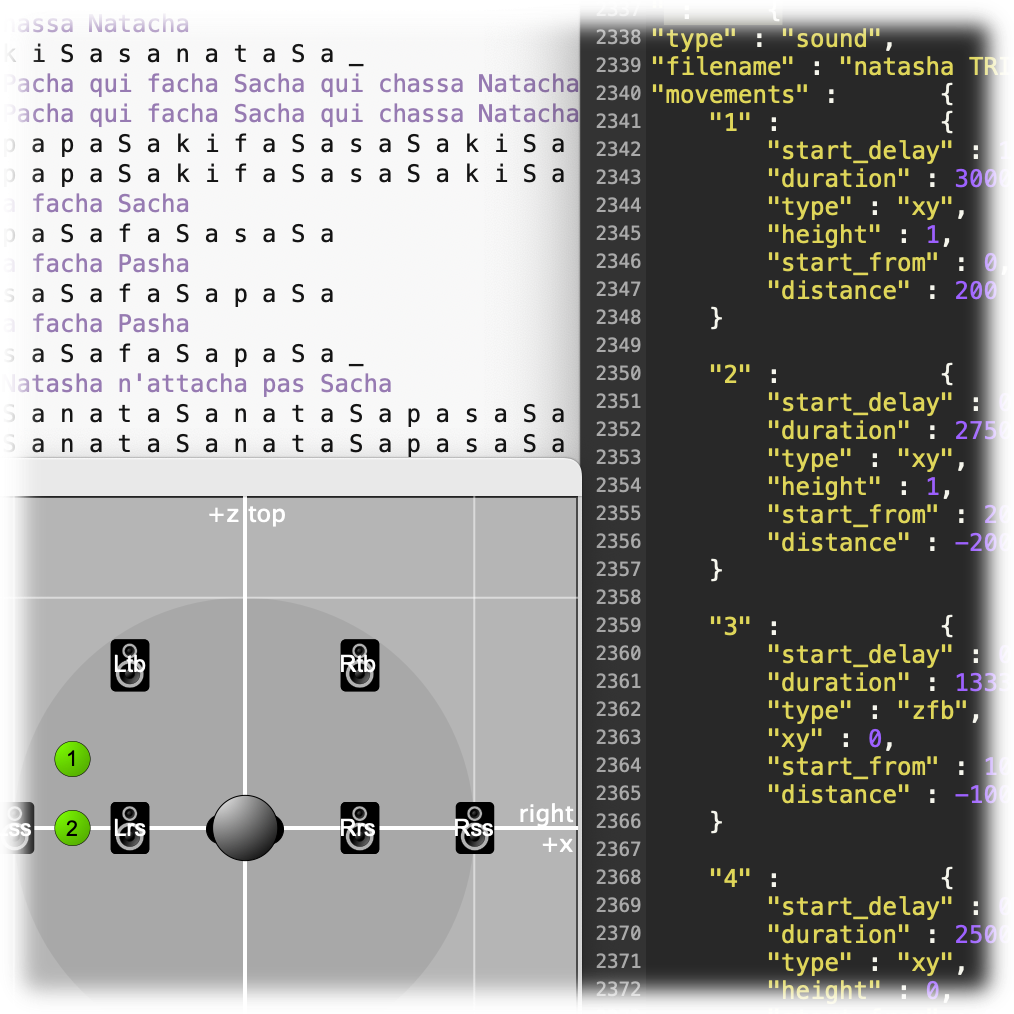
TWIST! is a compositional study which takes advantage of the unique capabilities of the ISiS singing synthesizer, developed at the IRCAM computer music institute in Paris. ISiS ‘performs’ musical scores by stitching together specially-made recordings of pitches and phonemes, according to style models derived from analysis of the commercial recordings of a selection of prominent French singers. Since ISiS is not subject to quite the same technical limitations as a human vocalist, TWIST! is able to explore extremes of musical speed, agility, precision, stamina and clarity of articulation that would otherwise be impossible. The ‘libretto’ consists almost entirely of French tongue-twisters or virelangues, and the only other sounds used are sampled footsteps which help to create the illusion of a singer that (/who) is virtually present in the performance space, moving around the audience in both realistic and rather more disruptive ways. The ‘performer’ of TWIST! may appear to take on various characteristics at different times: tentative, exploratory, didactic, cheeky, ostentatiously virtuosic, obsessive and even hysterical.
Bio:
Jonathan Pitkin was brought up in Edinburgh, and now lives in south London. He read music at Christ Church, Oxford before going on to study composition at the Royal Academy of Music, where he was the recipient of several prizes and awards. During this time he made an exchange visit to the Paris Conservatoire, studying composition, orchestration and electro-acoustic music, and in 1998 he attended Karlheinz Stockhausen’s inaugural composition course in Kürten, Germany. His principal teachers have been Christopher Brown and Guy Reibel. Jonathan's music has been performed and commissioned internationally as well as at major venues across the UK, including the Royal Festival Hall and the Huddersfield and Spitalfields Festivals. Performers have included the BBC Scottish Symphony Orchestra, the BBC Singers, members of the Philharmonia Orchestra, and conductors Garry Walker, Nicholas Cleobury, Stephen Layton and Martyn Brabbins. A number of his works have been broadcast by BBC Radio 3, including the orchestral pieces Mesh and Borrowed Time, as well as Con Spirito, for piano and Yamaha Disklavier, which was shortlisted for a British Composer Award in 2008, and included in the official British selection for the 2014 ISCM World Music Days. Two of his choral pieces are published by Oxford University Press as part of the New Horizons series, and another received the inaugural Temple Church Composition Prize in 2001. Jonathan was involved in the RPS Award-winning Sound Inventors initiative in 2002, and the spnm/Making Music scheme Adopt a Composer in 2003. He has a doctorate from the Royal College of Music, where he now teaches a range of courses relating to composition and academic studies, at Junior Department, Undergraduate and Postgraduate level.

Abstract:
“Sonic Weather” is a data-driven sound installation that transforms weather data into immersive, dynamic soundscapes, rendering each site’s unique sonic identity shaped by its weather patterns. It invites audiences to experience weather through sound and explore its influence on place.
Bio:
Abeer is an award-winning sound artist, audio designer, and researcher whose practice explores the intersection of sound, technology, and immersive media. Her work combines technical expertise with creative audio storytelling, focusing on the auditory perception of audiences to offer innovative ways to perceive the surrounding world through sound. Holding an MSc in Sound Design, a PGCert in Audio Technology, and a BA in Sound Engineering, Abeer’s work is grounded in both academic rigor and creative experimentation. Her installations invite audiences to listen differently, reframing sound as a vital tool for awareness, accessibility, and storytelling.

Abstract:
An extended interactive part of “Nexus Sonance” is an immersive spatial audio installation. This edition of the installation focuses on an interactive exploration of Georgian Polyphonic Choir. Sing through the choir yourself and explore this ancient vocal tradition in Spatial Audio! Traditional Georgian songs in spatial played throughout the exhibition.Artist names: Mikolaj Tchorzewski \\ Contributors: Adilei Ensemble
Bio:
Mikołaj Tchórzewski (Miko) is a multidisciplinary artist with a main focus on spatial audio. Based in London his work, shaped by experiences from backpacking across different countries and cultures, explores the subjects of sound, space, mysticism and collective cultural identity within contemporary music and sound art practices. Moreover, taking inspiration from his experience as a live electronic-experimental performer, he puts special focus in creating work that’s abstract and evocative, cradling a new genre of experiences. Miko works professionally as a sound designer for movies and spatial sound recordist for various projects - he is founder of VizAion Immersive Arts.

Abstract:
In early 2025, staff and students from the Sound and Music Programme, LCC, travelled to the London Wetlands Centre (part of the Wildfowl and Wetlands Trust (WWT)) to make recordings of the site and its surrounding areas. Initially, this piece set out to traverse city and Centre, transitioning from the chaos of one to the calm of the other. As the piece developed, however, I started to realise that it is not simply the London wetlands that are encircled; although their geographies are vastly different, most of the world’s wetlands are, in one way or another, equally encircled…
Bio:
Adam Stanović is a composer and performer of contemporary electronic music whose work spans more than twenty-five years. Beginning with experiments on cassette tapes and a four-track MiniDisc recorder, he went on to study Music Technology at Leeds Conservatoire and Music Production at the University of Leeds, where he first discovered computer-based composition. His works have been performed at over 500 festivals and concerts worldwide, earning numerous prizes, residencies, and distinctions in competitions such as Prix CIME, IMEB, Metamorphoses, Destellos, Musica Viva, and Ars Electronica Forum Wallis. Adam’s music has represented the UK at major international festivals, appeared on BBC broadcasts, and been released on more than a dozen record labels, including three solo albums with Empreintes DIGITALes and Sargasso. Over the past fifteen years, he has held residencies at renowned studios including GRM (France), Musiques & Recherches (Belgium), EMS (Sweden), and CMMAS (Mexico). Alongside his compositional practice, Adam lectures internationally on electronic music, exploring topics such as compositional process, performance authenticity, and the philosophical dimensions of digital sound. He co-founded the British ElectroAcoustic Network (BEAN) in 2016, is a director of the Composer’s Desktop Project (CDP), and previously served as Editor-in-Chief of the International Journal of Arts, Humanities and Social Sciences. Adam is currently Interim Dean for the Screen School, Programme Director for Sound and Music, and Reader in Electroacoustic Music at the London College of Communication, University of the Arts London.
Abstract:
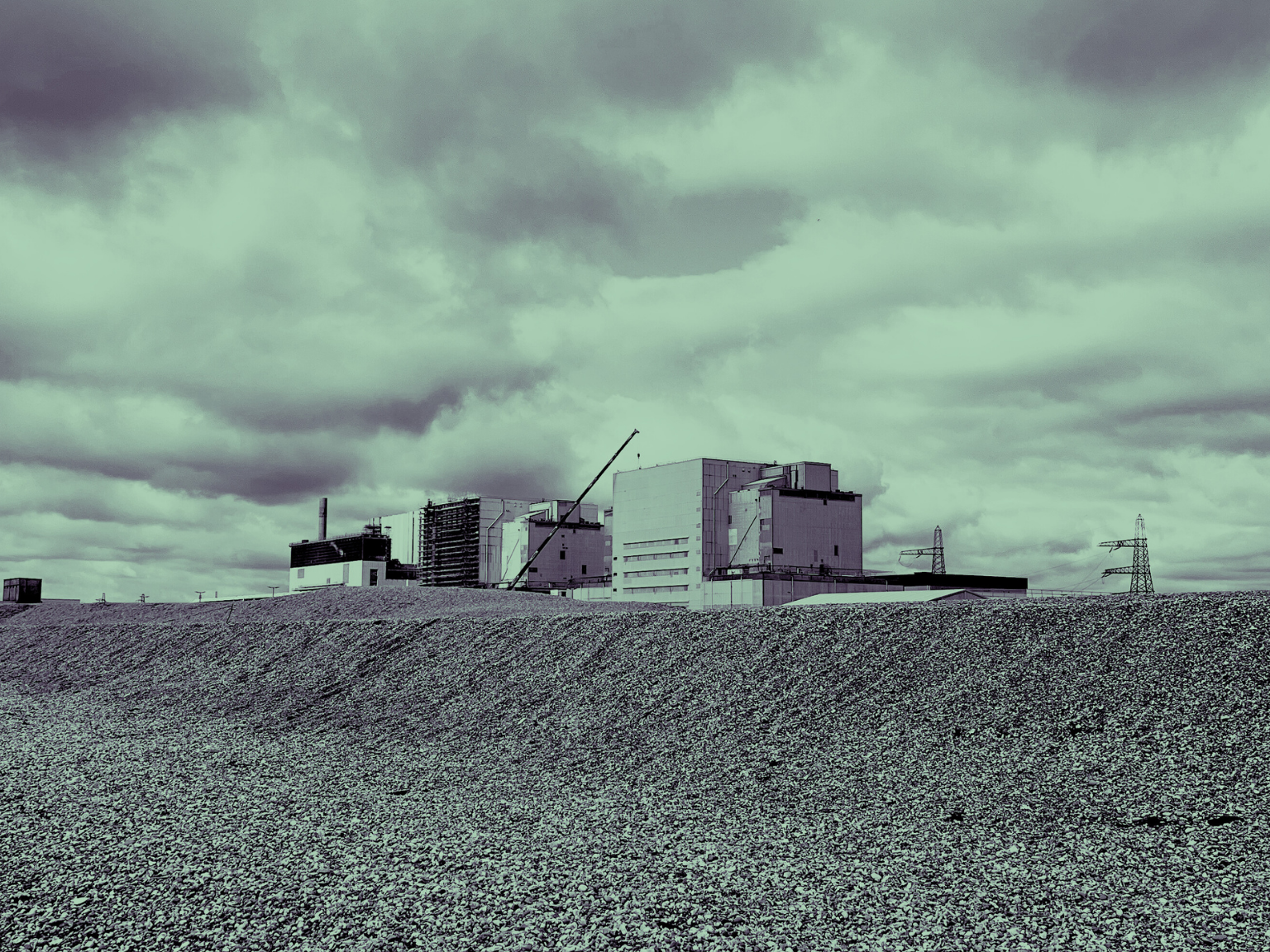
Hyperterrestrial questions the notion of sonic authenticity by exploring how we idealise, embellish, and mythologise soundscapes. When we record a place, is what we capture ever true? Or is every listening experience already subjective, filtered through imagination and memory? This installation focuses on four locations across one of England’s most simultaneously overlooked yet mbisonics landscapes: Dungeness and Romney Marsh. Field recordings from the Dungeness Nuclear Power Station, Denge Sound Mirrors, Romney Sands Holiday Park and St Thomas à Becket Church form the basis of each soundscape. While these recordings may initially appear faithful, they are layered and enhanced to create hyper-real interpretations of place—versions that evoke what we might imagine, desire, or misremember them to sound like. The installation continuously drifts through these immersive soundscapes in a dimly lit space, inviting listeners to question the tension between actuality and expectation, presence and projection in how we listen to, and project, ‘place’.
Bio:
Between her 20+ years making, performing and producing music, a PhD in Sonic Arts and a passion for creating supportive music tech education spaces for women, Isobel's career embraces a sense of independence and experimentation. Her four solo albums have amassed over 25 million Spotify streams, her sound works have been performed on international stages and she has published in journals, such as Organised Sound and The Journal of Sonic Studies. Threaded throughout her work is a fascination with how we make sense of ourselves, the world around us and the process of creative exploration itself. Isobel is proud to produce and host the critically acclaimed feminist music tech podcast, Girls Twiddling Knobs.
Abstract:
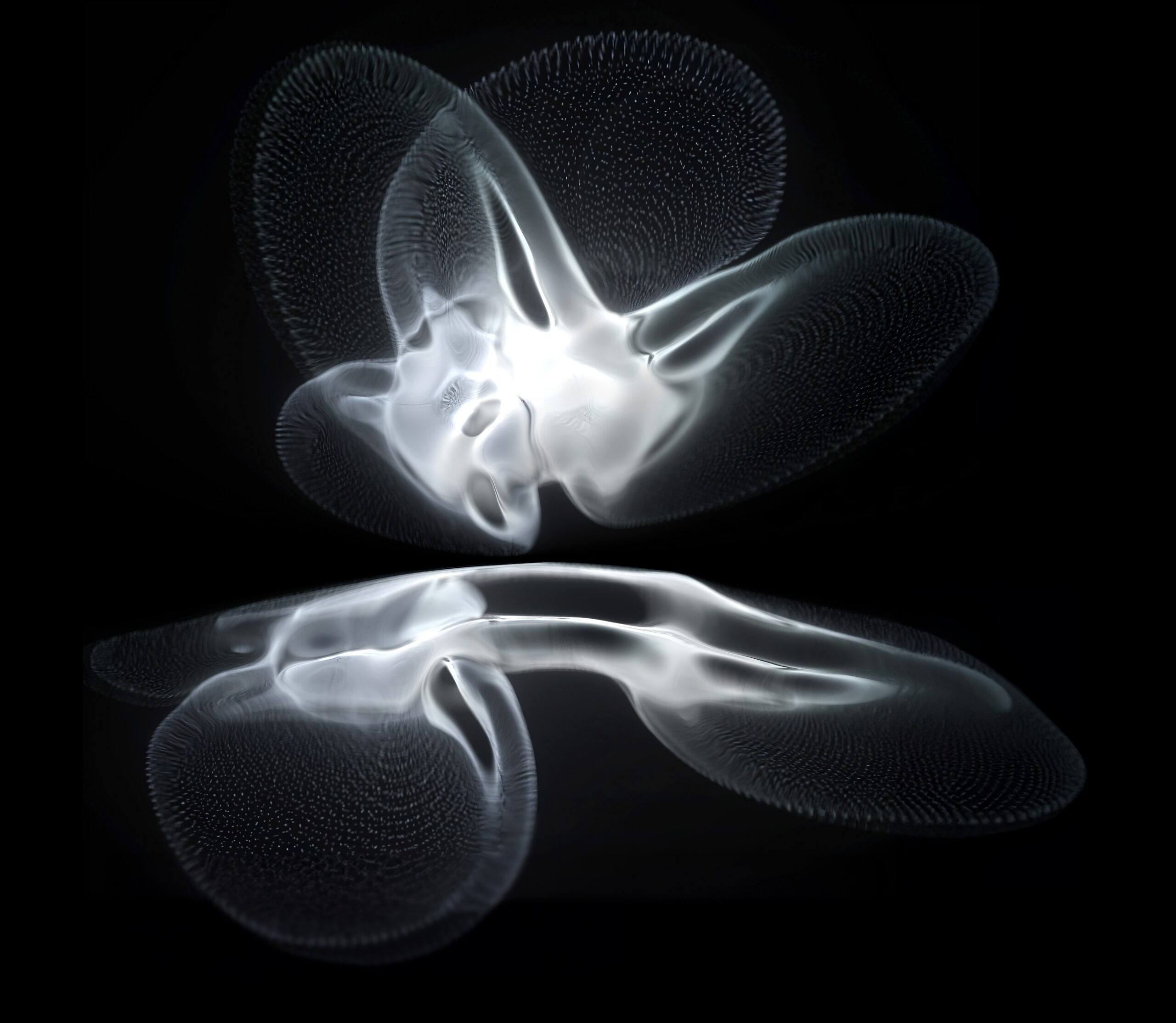
Perfect Cyan Bright Square presents a sonic amalgam of 'bell-ish' instruments designed and made by Emma-Kate, which she calls Resonant Bodies. Each sound is recorded using binaural and ambisonic microphones, helping to create a range of perspectival shifts that socilate between slow-evolving background drones and shimmering foreground details. The resultant sound is music-ish, playing with loose rhythmic, harmonic, and tonal logics that fall in and out of order. Released on Accidental Records August 9th 2024 on Antechamber Music 3. Remixed for CMMR in 2025.
Bio:
Emma-Kate is an architect, composer, musician, and digital artist whose work explores the creative intersections of sonic and spatial practices. She specialises in producing site-specific, spatialised audio-visual projects that investigate creative reciprocities between sonic and spatial practices Her compositions have been performed at internationally renowned venues, including the Sagrada Familia, the Southbank Centre, the Barbican, and the Brighton Festival. Notably, she composed for the London Symphony Orchestra’s prestigious Panufnik residency. As a solo artist, Emma-Kate has released a series of electronic-classical works on acclaimed labels such as Algebra, NMC, Musicity Global, and Accidental. Her music has been broadcast internationally on prominent platforms like BBC Radio 3, Resonance FM, and Tokyo Radio. Emma-Kate is an associate professor at the Bartlett School of Architecture, where she serves as the Director of Fabrication and Design Collaboration. She also teaches on the MSci and MEng Architecture programmes and conducts research in spatiosonic practice. She completed her PhD in July 2025. Additionally, she hosts Hunter Gatherer, an eclectic radio show on RTM.FM every fourth Thursday.
INSTALLATIONS : GALLERY 3
Wednesday 3 – Friday 7 November (daily), 09:00 – 18:00
Abstract:
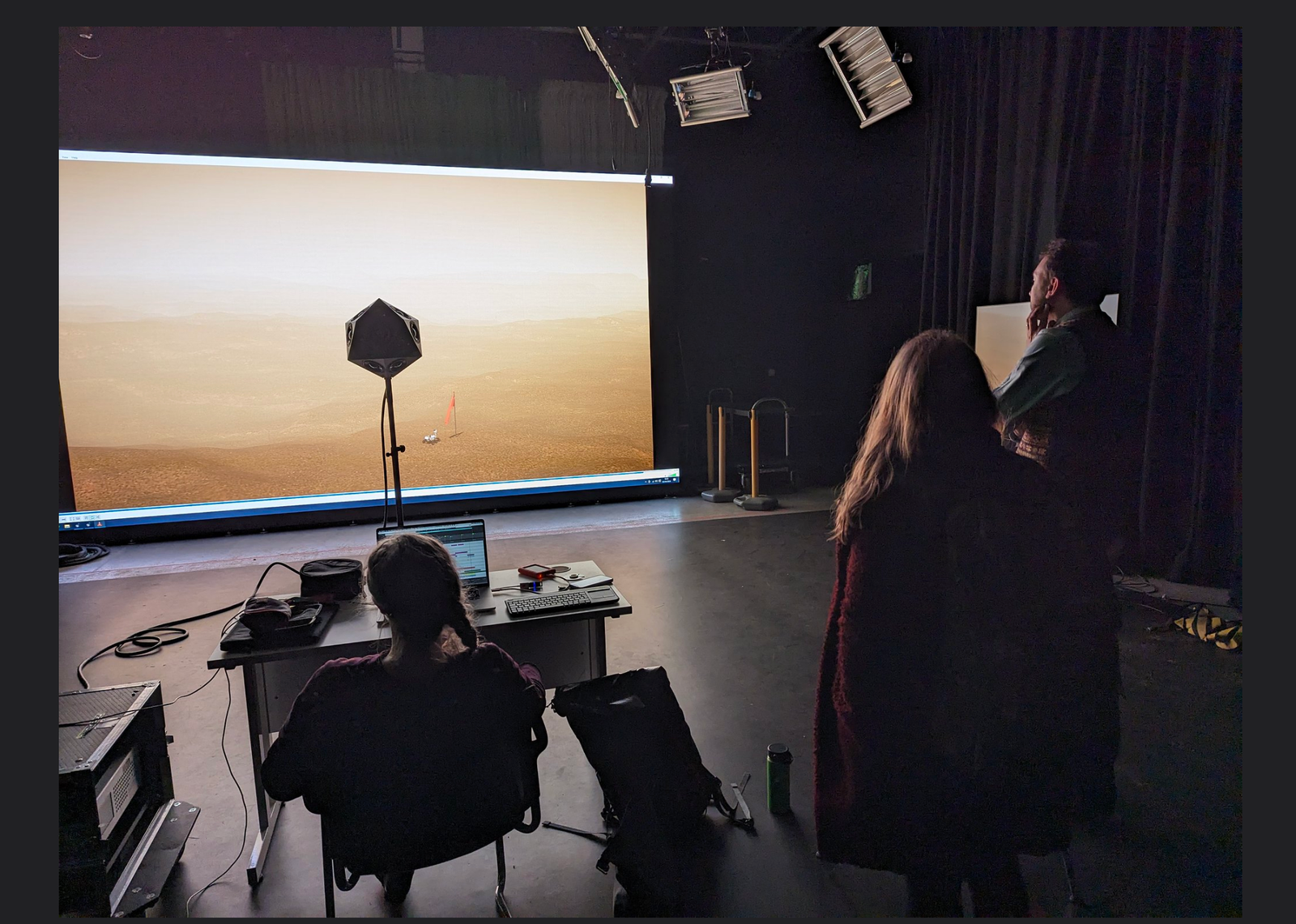
This piece explores field recordings from the SoundLapse Project which seeks to highlight the acoustical heritage of the wetlands from the South of Chile. I chose to explore the wetland soundscapes of two different locations around the city of Valdivia, Chile: Parque Urbano El Bosque and Curiñanco Beach. The piece reflects an imagined journey through these environments as I have never visited them in person. I would like to thank Felipe Ontondo for inviting me to compose a work for this project. This piece is featured on the Soundlapse release by Gruenrekorder, 2021 🔗. This piece was remixed for the IKO in May 2022.
Bio:
Brona Martin is an electroacoustic composer and sound artist from Banagher, Co. Offaly, Ireland. Her compositions explore narrative in electroacoustic music, acoustic ecology, oral history, sound and heritage and spatial audio techniques. Her works have been performed internationally at EMS, ACMC, ICMC, NYCEMF, ISSTA, ZKM, BEAST, Balance/Unbalance, Sonorities, MANTIS and the Huddersfield Contemporary Music Festival. She has been guest composer at EMS, Stockholm and Associate Artist in Residence at Atlantic Centre for the Arts, Florida. Brona is a Lecturer in Music and Sound at the University of Greenwich where she teaches post production sound and composition for film and games.

Abstract:
Suspended Time considers the temporal gap between preservation and encounter. The IKO loudspeaker projects sounds which hover at the threshold of perception - appearing, waiting, disappearing. The composition mirrors the Storehouse’s suspended temporality: a place where time is stretched, and meaning lies dormant until reactivated by presence.
Bio:
Emma Margetson is an acousmatic composer and sound artist working and living between London and Birmingham (England, UK). Her output encompasses acousmatic composition, sound art, acousmatic performance interpretation and, occasionally, live electronic music improvisation. Her research interests include sound diffusion and spatialisation practices; site-specific works, sound walks and installations; audience development and engagement; and community music practice. She studied at the University of Birmingham (England, UK) with Annie Mahtani and Scott Wilson for master’s and doctoral degrees in electroacoustic composition. The latter was funded by the Arts and Humanities Research Council (AHRC)-funded Midlands3Cities Doctoral Training Partnership (M3C) and was completed in 2021. Her music has been recognised and performed extensively in concerts and festivals internationally, and has been the recipient of a special mention in the Biennial Acousmatic Composition Competition Métamorphoses (Belgium, 2020), the Excellence in Sound Art & Sound Design Prize in the klingt gut! Young Artist Award (Germany, 2018), and a First prize ex æquo in the Space of Sound Spatialization Performance Competition (Belgium, 2019). She has received a number of commissions and collaborations including those from Royal Observatory (Royal Museums Greenwich), The Barber Institute of Fine Arts, and the Ikon Gallery. Emma Margetson is a Senior Lecturer in Music and Sound and Programme Leader of the Master of Arts Music and Sound Design course at the University of Greenwich (England, UK). She is also Co-Director of the Loudspeaker Orchestra Concert Series. Her work is available on several recording labels, including empreintes DIGITALes, Obs, Sonos Localia, and Urban Arts Berlin
Abstract:
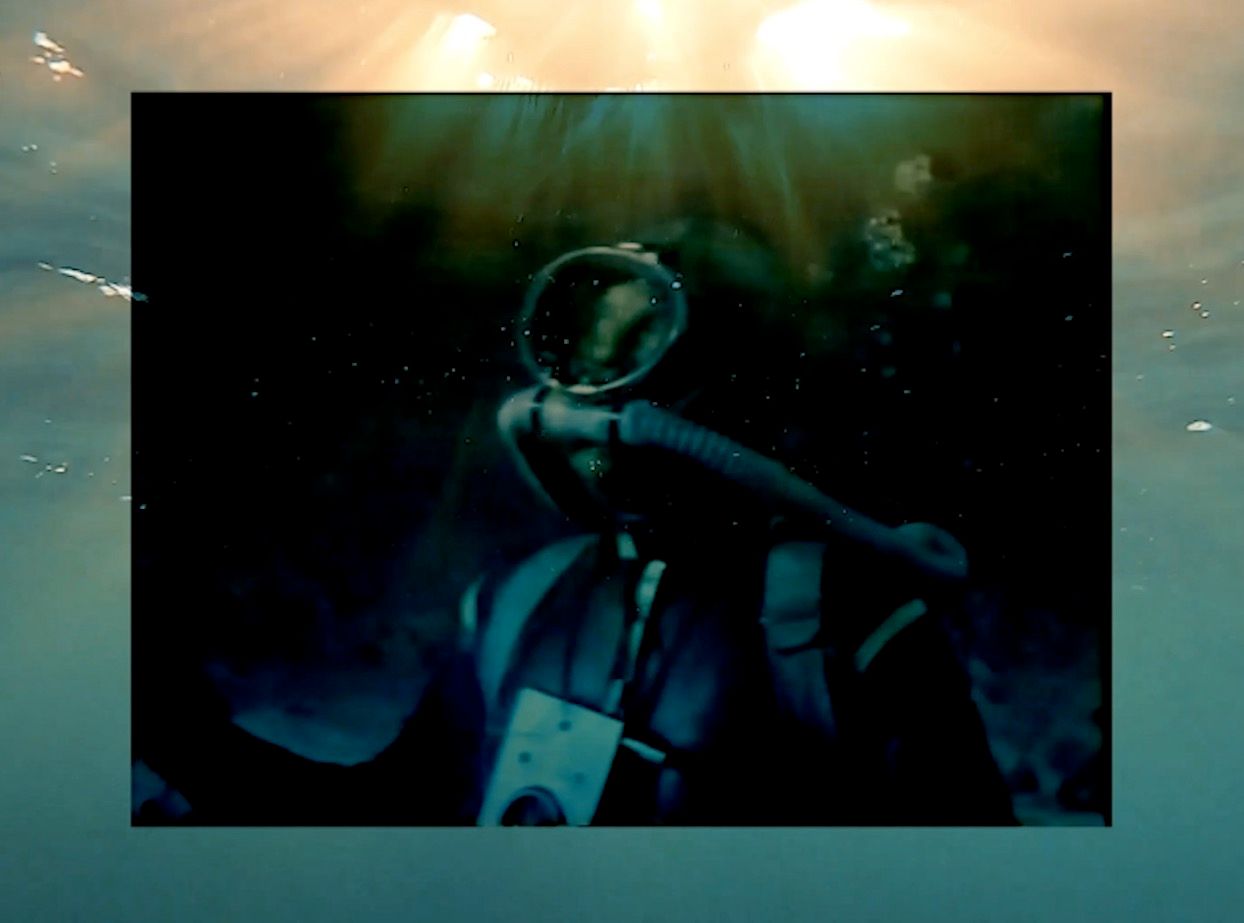
A probing and troubling of marine acoustic pollution, involving those who undertake related research. The work takes perspectives from both above and below sea level, to reach into non-human listening.
Bio:
Dr. Angela McArthur is an artist, academic and interdisciplinary advocate. She leads a Master's programme in spatial sound in the department of Anthropology at University College London. She has undertaken many artist residencies and interdisciplinary collaborations, including a five month residency working with the IKO loudspeaker at the Institut für Elektronische Musik (IEM) in Graz. She has had works performed extensively. She initiated the first UK tour of IKO works in 2019. Her work centres around underrepresented onto-epistemologies, ocean environments, and intersecting sites of artistic practice. She champions diversity in access and representation in sound and beyond. She's worked in studio, live and location environments and founded Soundstack, an annual series of workshops, masterclasses and concerts about spatial sound aesthetics
INSTALLATIONS : LEVEL 2 HALL WALKWAY
Wednesday 3 – Friday 7 November (daily), 09:00 – 18:00
Abstract:
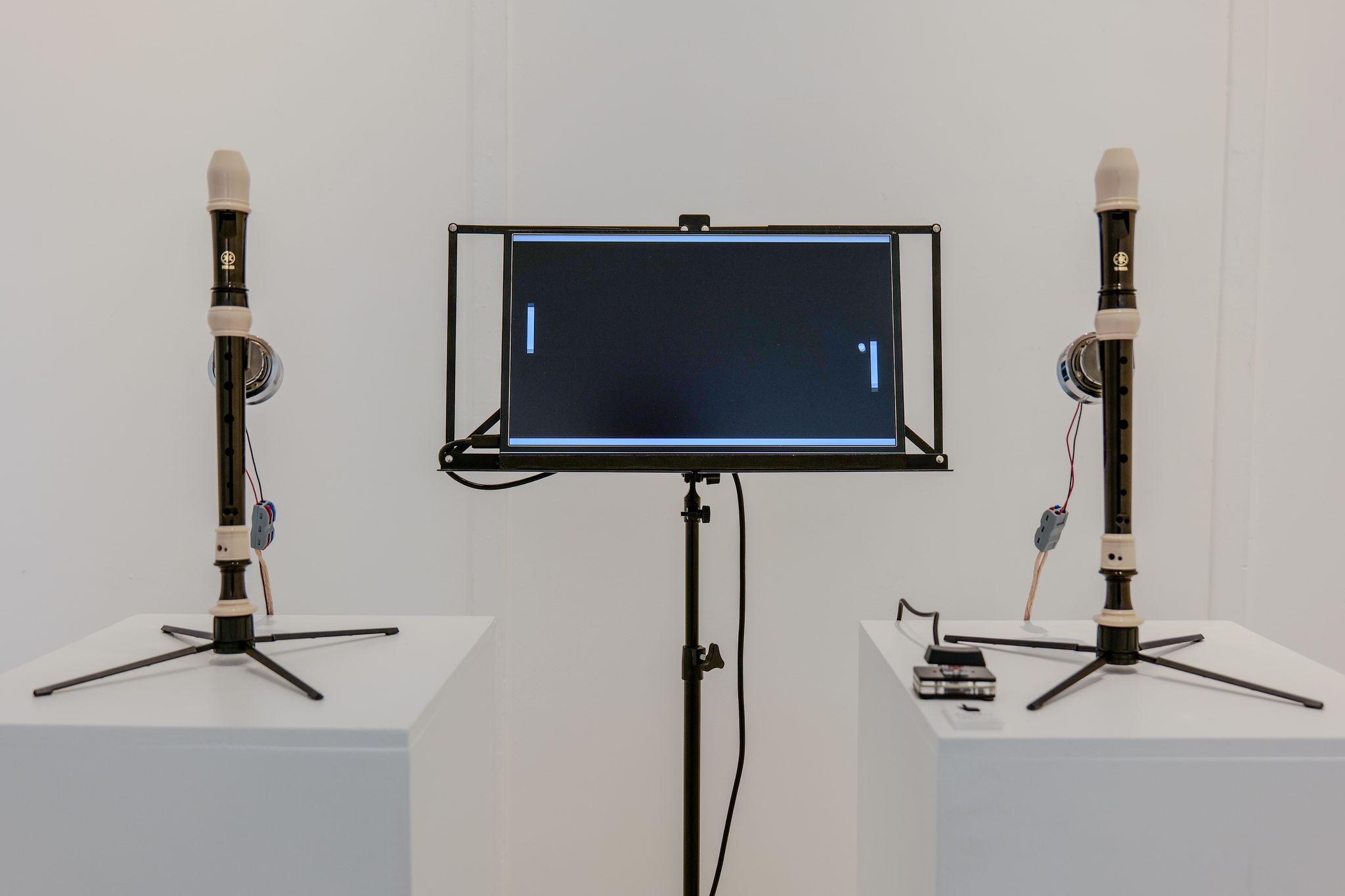
A PONG-inspired sonic system uses Unity ML-Agents to train AI paddles sustaining rallies with multiple balls. Paddle positions map to pitch, driving a vibration speaker on a recorder to create touchless resonance. Viewers spawn balls via keyboard, shaping sonic density interactively.
Bio:
Motoki Ohkubo (*1988) is a Japanese composer, an audio engineer and a part-time teacher at Nagoya University of the Arts, Aichi Shukutoku University and Soai University. In his musical compositions, he uses technologies such as audio engineering, programming and video. His artistic practice comprises a wide range of expression, such as electroacoustic and algorithmic composition, chamber music, dance music, installation and video. Ohkubo won the ACSM116 award at the Contemporary Computer Music Concert in 2010 and the Sony special award at the Wired Creative Hack Awards in 2019. His works have earned prizes and have been performed in several competitions, concerts and symposiums, such as Sound walk (2010) and Close, Closer (2013) of Musica Viva Festival (Portugal), Sound deperture: LIFE LIKE LIVE at 3331 Chiyoda Art Festival 2014 (Japan), Muestra Internacional de Musica Electroacustica 2014 (Mexico), Future City Yokohama Smart Illumination Award 2014 (Japan), RAW Acousmatic for the People III (Sweden), 21st International Symposium on Electric Arts (2015, Canada), 22nd Campus Genius Award (2016, Japan), Sound Performance Platform 2019 (Japan) and Voyage 2021 Beyond Ripples (Japan).